

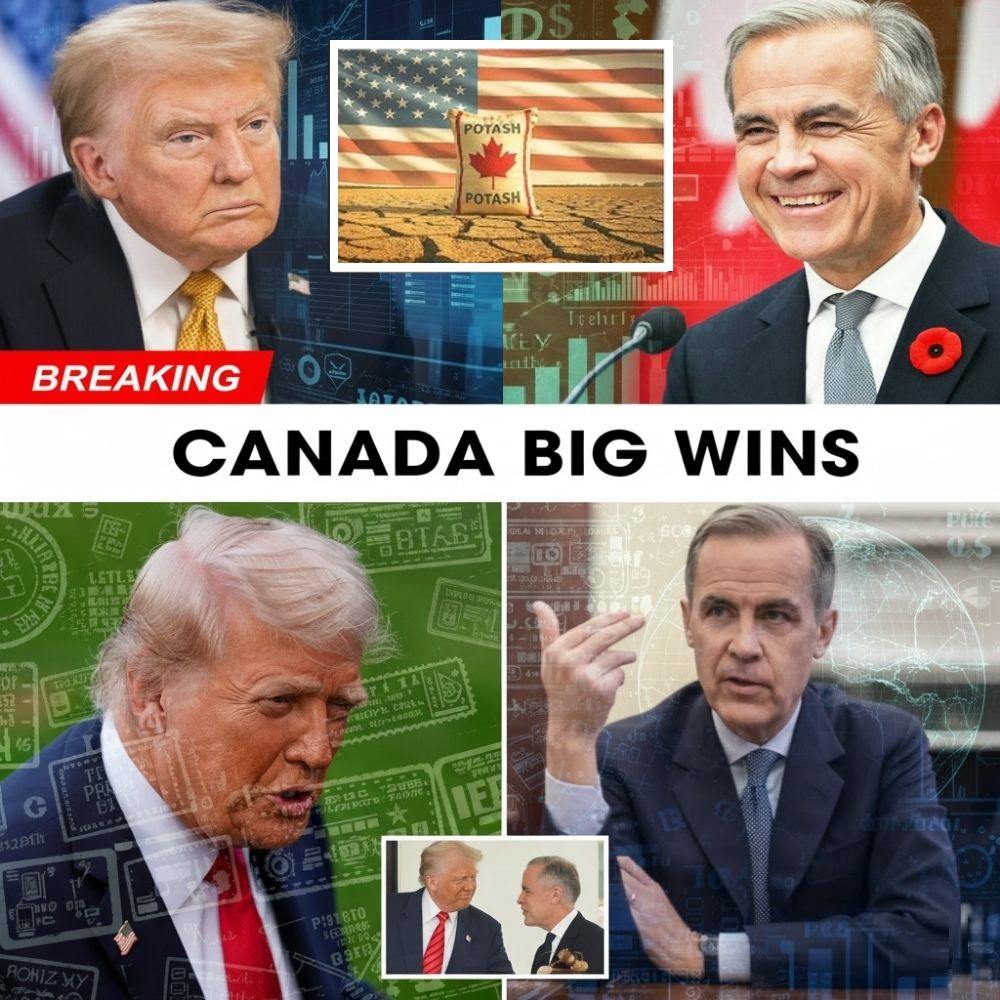
Trump’s potash tariff has backfired spectacularly, exposing the fragility of American agriculture and handing a strategic advantage to Canada. As U.S. farmers face soaring costs and potential bankruptcy, Canada’s dominance in the potash market has never been more pronounced.
In 2023, the U.S. produced a mere 400,000 tons of potash but consumed 5.3 million tons, relying overwhelmingly on Canadian imports. This dependency has placed American farmers in a precarious position as tariffs threaten to disrupt their already strained supply chains.
Potash, potassium chloride, is essential for modern agriculture, acting as a vital ingredient in fertilizers that sustain global food production. Without it, crops would struggle to grow, leading to food insecurity on a massive scale.
The tariff war initiated by Trump was intended to protect American jobs but has instead put farmers at risk. Economists warned that any disruption in Canadian potash supplies could lead to a staggering 20 to 30 percent increase in fertilizer prices, translating into hundreds of thousands of dollars in additional costs for farmers.James Whitaker, an Iowa farmer, exemplifies the crisis. In 2024, he spent approximately $420,000 on fertilizer, with nearly half allocated to potash. The looming tariffs could see his costs surge by $120,000 overnight, a devastating blow to family farms.
The situation has already resulted in a 55 percent surge in U.S. farm bankruptcies in 2024, with analysts predicting that this number could double if tariffs are fully enforced. The stakes are alarmingly high, as American farmers face a dual threat of falling revenues and rising expenses.
Canada, on the other hand, has seized the opportunity presented by U.S. tariffs. With over 22 million tons of potash production, Saskatchewan holds a strategic position in the global market, supplying countries like Brazil and China eager to secure their food systems.The Canadian government has hinted that potash could be used as a strategic countermeasure in response to U.S. trade actions. If Washington continues its tariff approach, Canada could restrict potash exports, further jeopardizing American farmers.
Unlike soybeans, which can be sourced from other countries, Canadian potash is irreplaceable in the short term. The U.S. risks losing its agricultural backbone if Canada decides to pivot its exports toward more reliable partners.As American farmers brace for soaring costs, the Trump administration’s response has been to propose a $65 billion agricultural relief package. However, many experts deem this a temporary fix rather than a long-term solution, leaving farmers vulnerable to future market fluctuations.In contrast, Canada is focusing on resilience and sustainability, investing in programs that support its agricultural sector against volatility. This strategic vision positions Canada as a reliable supplier, enhancing its reputation on the global stage.
The unfolding potash crisis serves as a stark reminder of the U.S.’s growing dependence on Canada for vital resources. While Washington grapples with the implications of its tariff policies, Canadian farmers are poised to benefit from a shifting global landscape.
The question remains: will the U.S. lift tariffs to protect its farmers, or will it continue down a path of confrontation that threatens the very foundation of American agriculture? As the stakes escalate, the future of food security hangs in the balance.