

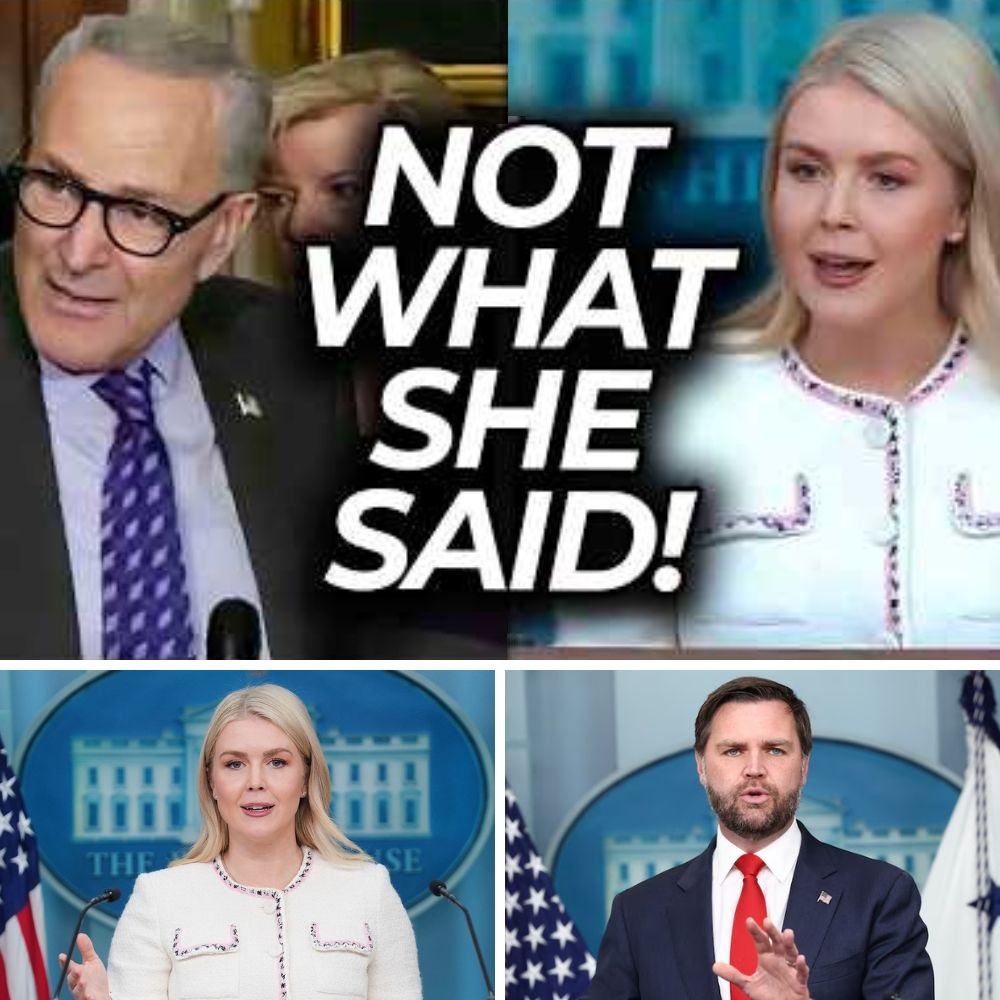
Dems Claim Press Secretary Made a “Crazy” Statement — But Here’s What She Actually Said
A recent White House press briefing has sparked a storm of confusion and criticism after social media users and some Democratic commentators accused Press Secretary Karine Jean-Pierre of making what they called a “crazy claim” about so-called “cheap fakes” targeting President Joe Biden. However, a closer look at her remarks reveals a far more measured — and misunderstood — statement.
The controversy began after Jean-Pierre addressed viral clips circulating online that appeared to show President Biden in awkward or confusing moments at public events. Conservative commentators labeled the clips as evidence of Biden’s declining mental acuity, while some Democrats feared the videos were being edited or presented misleadingly.
At the July 2, 2024 press briefing, Jean-Pierre was asked whether the White House believed the videos were being manipulated to harm the president’s image. Her response was direct but cautious. She said: “Independent, mainstream fact-checkers have been calling out cheap fakes. And at the end of the day, they’re fakes — that’s what they were — targeting the president.”
Almost immediately, several social media accounts and partisan news sites seized on the phrase “cheap fakes,” claiming Jean-Pierre was accusing the media or the public of fabricating content. Some even alleged she was admitting that the White House had created the fakes itself. Within hours, hashtags like #CheapFakeGate and #KJPConspiracy trended across platforms, prompting heated debate.
But the transcript of the briefing tells a different story. Jean-Pierre clarified that the term “cheap fakes” didn’t come from her or the administration. “The ‘cheap fakes’ didn’t come from me,” she said. “That came from the media. They called it ‘cheap fakes.’” She emphasized that the phrase referred to lightly edited or misleadingly cropped videos circulating online — not sophisticated AI-generated deepfakes, and certainly not any government-made content.
Fact-checkers later confirmed that her comments were consistent with the language used by several major outlets, including Reuters, The Associated Press, and CNN, which had described some viral Biden clips as “cheap fakes” — ordinary footage altered or taken out of context to mislead viewers.
Political analysts suggest that the uproar reflects the growing difficulty of navigating the information landscape in an election year. “In 2024, perception spreads faster than facts,” said Dr. Carla Ruiz, a media communications professor at Georgetown University. “What Jean-Pierre actually said was fairly tame. But when a phrase like ‘cheap fakes’ hits social media, it can be twisted into a much bigger story.”
The White House has not issued any further clarification, maintaining that Jean-Pierre’s remarks were transparent and fully on record. Meanwhile, the viral reaction underscores how a few words at a press briefing can become political ammunition in today’s polarized environment.
In the end, Jean-Pierre’s comments appear to have been more about misinformation than conspiracy — a warning about misleading clips rather than an accusation of widespread fakery. Still, the controversy highlights the challenge faced by public officials in an era where context often gets lost, and every sound bite becomes a battleground.