

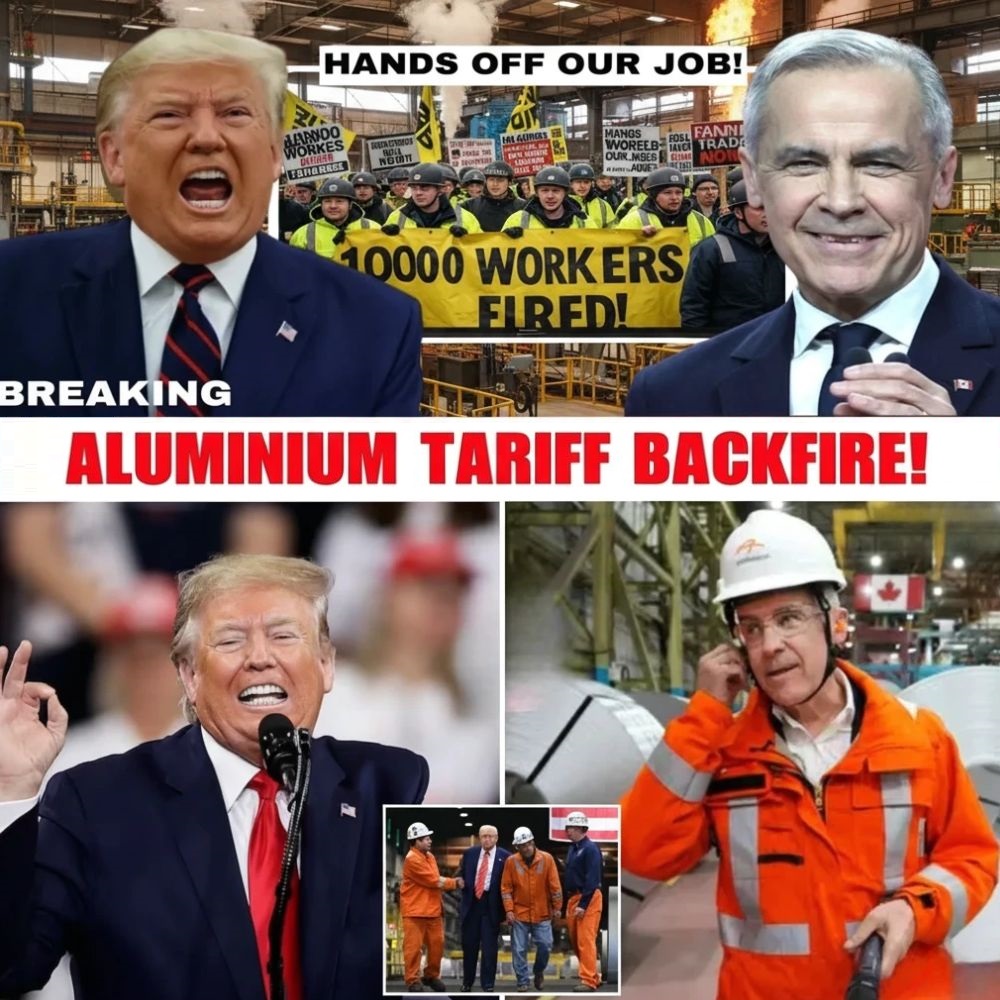
In a shocking turn of events, President Trump’s aggressive tariff policy has led to the layoff of over 100,000 American workers, raising urgent questions about the efficacy of protectionist measures in revitalizing domestic industries. Originally intended to bolster American manufacturing and safeguard jobs, the recent increase in aluminum tariffs from 25% to a staggering 50% has instead catalyzed a wave of factory shutdowns and job losses, particularly in the aluminum sector.
The decision to raise tariffs was framed as a bold initiative to protect American workers and reduce reliance on foreign imports. However, the reality has proven far harsher. Factories across the U.S. have fallen silent, with many workers receiving pink slips as companies struggle to cope with soaring costs. The situation is particularly dire in states like Kentucky and Ohio, where energy prices are significantly higher than those in Canada, the U.S.’s closest trading partner.
Aluminum production is energy-intensive, requiring vast amounts of electricity. In Canada, where hydroelectric power is abundant and inexpensive, aluminum producers have thrived, even as their American counterparts falter. With electricity prices in Quebec around 4.5 cents per kilowatt-hour—less than half of what many U.S. states pay—Canadian facilities have ramped up production to meet global demand, effectively capitalizing on the U.S. policy misstep.
The ramifications of this tariff increase are staggering. According to reports, approximately 20,000 jobs directly tied to aluminum smelting have vanished, while downstream industries reliant on aluminum are also feeling the pinch. The ripple effect of these layoffs is being felt across the economy, leading many to question whether the tariffs have inadvertently become job killers rather than protectors.
As American manufacturers grapple with increased costs and reduced competitiveness, Canadian aluminum producers have seized the opportunity to expand their market share. The result is a significant shift in the North American aluminum landscape, with Canadian facilities onboarding new employees while U.S. plants struggle to keep the lights on.
This situation mirrors historical precedents, notably the steel tariffs imposed in 2002, which ultimately led to a loss of over 200,000 jobs in downstream industries. Economists are warning that the current aluminum crisis could foreshadow similar outcomes across other sectors, including automobiles and food production. The lesson remains clear: tariffs alone cannot rectify systemic issues within U.S. manufacturing without addressing underlying production costs and infrastructure challenges.
As the fallout from this policy continues to unfold, many are left wondering if the U.S. has inadvertently weakened its industrial base while strengthening that of its neighbor. The once-promising narrative of bringing back American jobs has devolved into a cautionary tale of what happens when protectionist measures are implemented without a comprehensive plan to support domestic industries.
With Americans facing mounting uncertainty and job losses, the urgency for a reevaluation of trade policies has never been greater. The question now looms: can the U.S. recover from this miscalculated strategy before it’s too late, or has the damage already been done? The future of American manufacturing hangs in the balance as the nation watches and waits.