

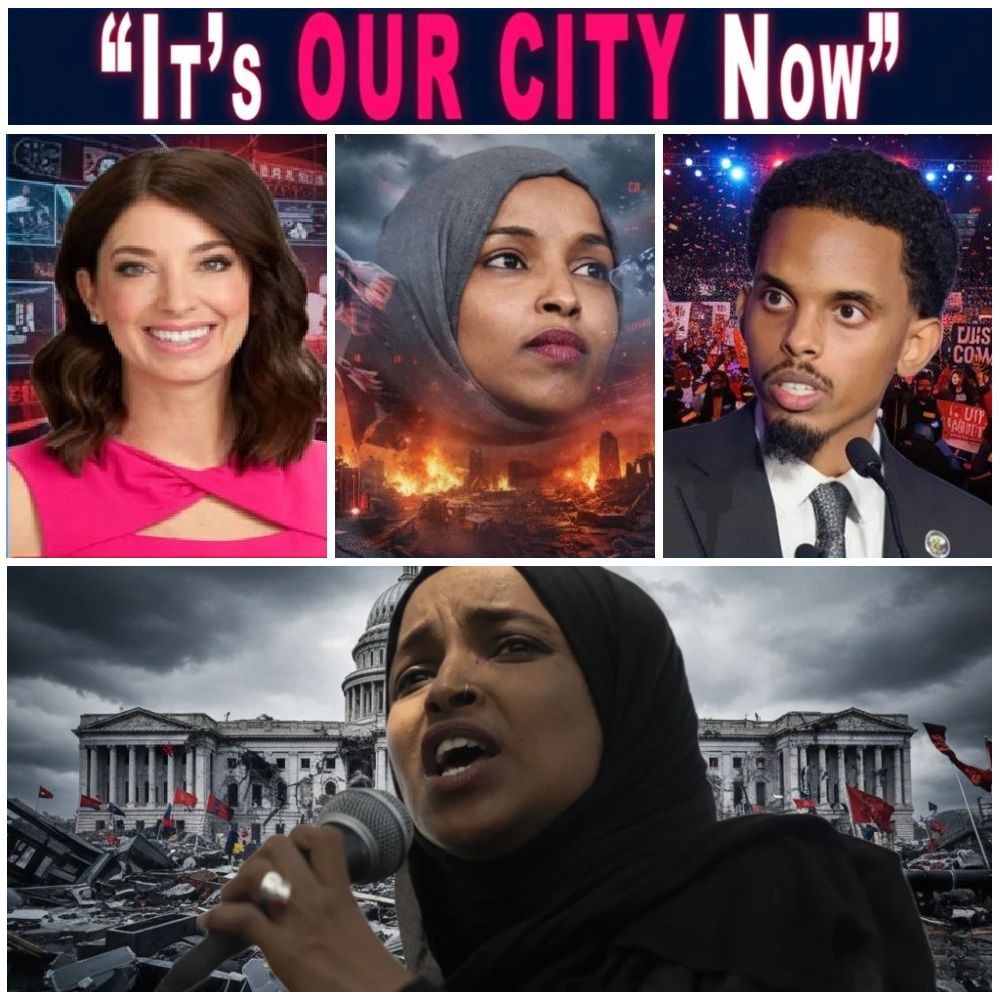
Somalis Take FULL CONTROL of Minneapolis as Leaders IGNITE Citywide Meltdown
Minneapolis in Turmoil: Somali Community, Leadership Showdown, and America’s Immigration Debate
Introduction
Minneapolis, Minnesota, has become ground zero for a heated national debate over immigration, local governance, and federal law enforcement. As the Somali-American community grows in influence and visibility, city leaders and federal agencies are locked in a standoff over policies, priorities, and the future direction of the state. Accusations of fraud, corruption, and political favoritism swirl, while local and national figures spar over the meaning of American identity and the rule of law.
This article explores the latest developments in Minneapolis, the role of Somali-Americans in local politics, the response from city and state officials, and the broader implications for the United States.
The Political Climate: “Frostbitten Circus” and Citywide Meltdown
Minnesota’s political landscape has been described as chaotic and unpredictable, with commentators likening the situation to a “frostbitten circus.” The state has been rocked by a series of scandals, policy debates, and viral headlines, each more startling than the last. Corruption, chaos, and what some see as “anti-American nonsense” have become recurring themes in local discourse.
The latest controversy erupted following a press conference in Minneapolis, where Mayor Jacob Frey announced that the city would not cooperate with ICE (Immigration and Customs Enforcement) in targeting Somali residents. Frey’s declaration came amid ongoing federal investigations into COVID-related fraud schemes, which have disproportionately implicated members of the Somali community.
Somali-Americans in Minneapolis: Growth, Influence, and Scrutiny
The Somali-American population in Minneapolis and St. Paul has surged in recent decades, now estimated at over 80,000. Many arrived as refugees fleeing civil war and instability in Somalia, seeking safety and opportunity in Minnesota’s welcoming communities. Over time, Somali-Americans have built vibrant neighborhoods, opened businesses, and become active participants in local politics.
Congresswoman Ilhan Omar, a Somali immigrant herself, has emerged as a national figure, representing Minnesota’s 5th Congressional District and serving as a lightning rod for both support and criticism. Somali-Americans now constitute a significant voting bloc, with the power to shape elections and policy debates.
However, the community’s rapid growth and political influence have also attracted scrutiny. Recent reports indicate that over 90% of individuals implicated in Minnesota’s largest COVID fraud case are Somali. Critics argue that city leaders have turned a blind eye to abuse, while supporters caution against collective punishment and xenophobia.
Leadership Response: Sanctuary Policies and Political Resistance
Mayor Frey’s stance against ICE raids reflects a broader trend among Democratic city leaders who prioritize sanctuary policies and immigrant protections. During the press conference, Frey addressed the Somali community directly, even speaking in Somali—a move that drew both praise and criticism.
Minneapolis Police Chief Brian O’Hara joined Frey in urging Somali residents to call 911 if they encounter masked ICE agents making arrests, likening federal law enforcement to kidnappers. O’Hara emphasized that the police would intervene and document such incidents, reaffirming the city’s commitment to protecting its residents.
These measures have sparked controversy, with critics accusing city officials of undermining federal law and prioritizing political theater over public safety. Former ICE Director Tom Homan condemned the Minneapolis leadership, arguing that their number one responsibility is the safety and security of their communities, not political grandstanding.
Federal Law Enforcement: Zero Tolerance and Legal Clashes
Federal agencies have responded with a “zero tolerance” approach to obstruction. U.S. attorneys have warned that any officials who impede ICE operations could face prosecution. The standoff between local and federal authorities highlights the broader struggle over immigration policy, sanctuary cities, and the limits of local autonomy.
The tension is not unique to Minneapolis. Across the country, cities with large immigrant populations have adopted sanctuary policies, often clashing with federal agencies over enforcement priorities. The debate raises fundamental questions about the balance between local governance and national security.
Somali Leadership and Accusations of Racism
At the Minneapolis press conference, a Somali city council member denounced President Trump as “racist, xenophobic, and islamophobic,” vowing to fight what he described as anti-immigrant policies. The council member’s remarks reflect the deep divisions in Minneapolis and the challenges facing immigrant leaders in navigating a polarized political environment.
Ilhan Omar, frequently at the center of controversy, was asked whether she had begun packing her bags for Somalia in response to Trump’s calls for her deportation. Omar responded defiantly: “I’m not going anywhere. I will be here probably longer than Trump.” She dismissed Trump’s obsession with her as unhealthy, adding, “I hope he gets help.”
Omar’s rapid rise—from a negative net worth in 2019 to an estimated $30 million in 2025—has fueled questions about her financial dealings, political alliances, and role in Congress. Critics argue that her behavior, not her identity, is the reason for increased scrutiny.
Fraud, Welfare, and Economic Disparities
The debate over Somali influence in Minneapolis is closely tied to allegations of fraud and welfare abuse. Conservative commentators point to Section 8 housing, new cars, and apparent wealth among Somali families as evidence of systemic abuse. Personal anecdotes from local residents reinforce these claims, though critics caution against generalizing from isolated cases.
Trump and his supporters have called for stricter enforcement, arguing that Somali immigrants have taken advantage of government programs and contributed little to the broader economy. “Frankly, don’t need their people coming into our country telling us what to do,” Trump asserted, referencing allegations of fraudulent marriages and visa applications.
Local leaders, including St. Paul Mayor Melvin Carter, have defended immigrant rights, arguing that all residents—regardless of status—deserve protection and support. Carter’s announcement of new benefits for families, including paid family medical leave, has drawn criticism for extending eligibility to illegal immigrants.
Governor Tim Walz has sought to balance compassion with accountability, insisting that not all Minnesotans are fraudsters while acknowledging the need for stronger safeguards. Walz’s defense of his policies has been met with skepticism from critics who argue that Minnesota’s programs are “wildly susceptible to fraud.”
Policy Changes: Benefits, Flags, and Identity
The debate over benefits and eligibility has become a flashpoint in Minnesota politics. Governor Walz’s paid family medical leave program, set to begin in 2025, allows all residents—including illegal immigrants—to apply for assistance. Critics argue that such policies incentivize abuse and undermine the integrity of the system.
Changes to the Minnesota state flag have also sparked controversy, with some observers noting its resemblance to the Somali flag. The symbolism has fueled speculation about the state’s shifting identity and political allegiances.
The broader question remains: What does it mean to be a Minnesotan, and who gets to decide? As Somali-Americans and other immigrant groups become more visible and influential, debates over assimilation, representation, and American values have intensified.
National Implications: Immigration, Security, and Political Divides
The turmoil in Minneapolis reflects larger national trends. Across the United States, debates over immigration, sanctuary policies, and federal enforcement have become central to political discourse. High-profile cases of fraud, crime, and policy abuse have fueled calls for reform and stricter oversight.
Recent incidents—such as the arrest of an illegal immigrant for a deadly crash in Oregon—have underscored the stakes of the debate. Critics argue that lax enforcement and political favoritism put American lives at risk, while supporters emphasize the need for compassion and due process.
The Biden administration, state governors, and local officials continue to grapple with the challenges of balancing security, integration, and civil rights. The outcome of these debates will shape the future of American society and the meaning of citizenship.
Media, Public Opinion, and Viral Moments
Media coverage of Minneapolis’s crisis has been polarized and sensationalized, with viral clips and social media commentary amplifying both sides of the debate. Satirical moments—such as Congress members sparring over jacket sizes—provide comic relief amid the tension, but also highlight the performative nature of modern politics.
Public opinion remains deeply divided. Some Minnesotans and Americans support sanctuary policies and immigrant protections, viewing them as essential to a just and inclusive society. Others demand stronger enforcement, accountability, and a return to “America First” principles.
The Road Ahead: Accountability, Reform, and Civic Engagement
As Minneapolis and Minnesota confront ongoing challenges, the need for accountability and reform is clear. Policymakers must strengthen oversight of government programs, ensure targeted enforcement, and foster dialogue between immigrant communities and law enforcement.
Community leaders must speak out against abuse while promoting transparency and cooperation. Residents must engage in civic life, voting for leaders who reflect their values and priorities.
The challenge is to address legitimate concerns about fraud and abuse without fueling xenophobia or undermining the principles of fairness and inclusion. Only by promoting transparency, accountability, and dialogue can Minnesota and the nation move forward.
Conclusion
Minneapolis’s current crisis is more than a local controversy—it is a microcosm of the national debate over immigration, identity, and governance. As Somali-Americans and other immigrant groups shape the future of the city, leaders and residents alike must grapple with complex questions about representation, accountability, and the rule of law.
The challenge for Minnesota and the United States is to uphold the values of democracy, fairness, and inclusion while ensuring security and integrity. The outcome will determine not only the fate of Minneapolis but the future direction of American society.