

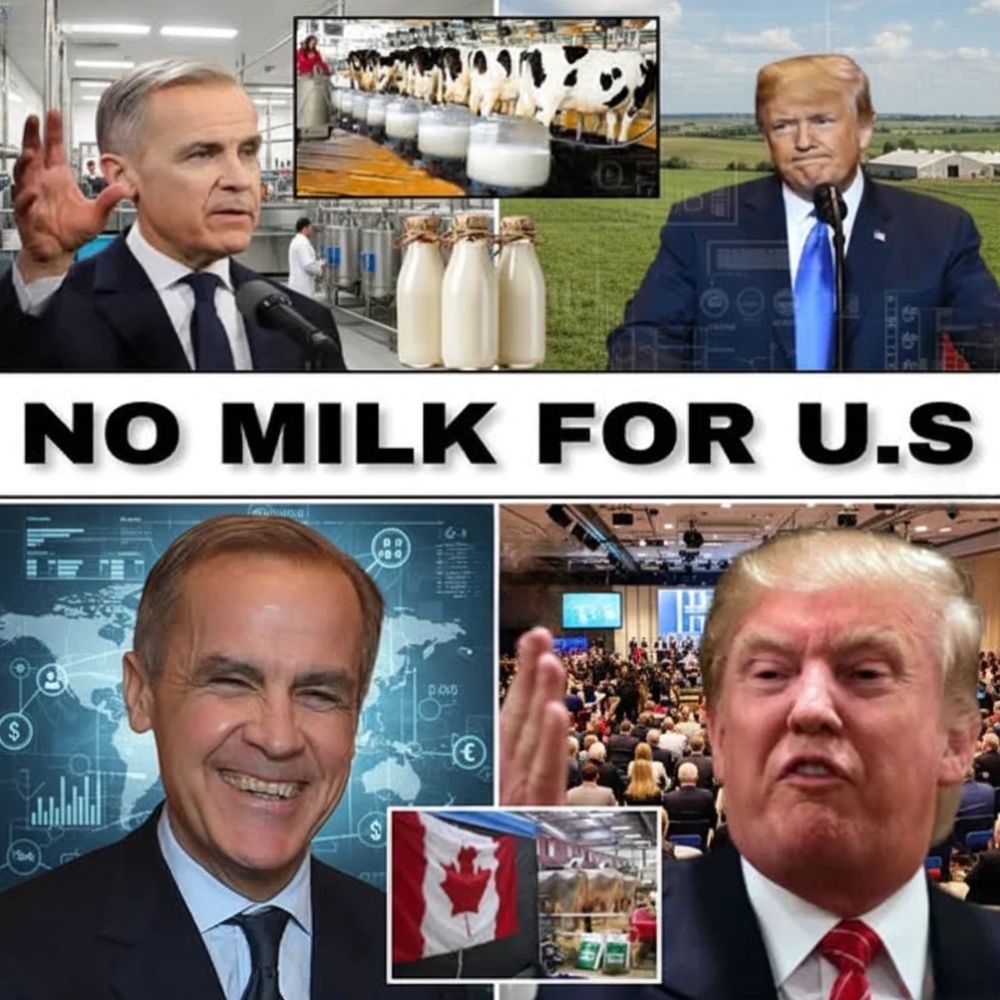
In a bold declaration that could reshape the landscape of American dairy consumption, former President Donald Trump recently asserted that the United States does not need Canadian milk or dairy products. This statement, made amidst ongoing supply chain challenges, has raised alarms among industry experts who warn of looming dairy shortages in the U.S. as early as 2026.
While it may seem that the U.S. dairy sector is robust enough to withstand a halt in imports from Canada, the reality is far more complex. Canada exported nearly half a billion dollars worth of dairy products to the United States in 2023, primarily specialty items like artisan cheeses that American farms struggle to replicate. These products, which include high-quality soft cheeses from Quebec and goat cheeses from Ontario, are not just luxuries; they are staples in many restaurants and grocery stores across major U.S. cities.
The fallout from Trump’s remarks is already being felt. Importers and distributors are reporting heightened anxiety over potential supply disruptions, prompting some retailers to stockpile products and raise prices preemptively. The fear of shortages is palpable, with reports indicating that certain soft cheeses are already missing from shelves and that goat cheese is experiencing significant backorders. This is not merely a matter of preference; it’s a crucial supply chain issue that could lead to increased costs for consumers and diminished choices in the marketplace.
Experts emphasize that the U.S. dairy industry is predominantly focused on cow milk production, leaving a significant gap in the availability of specialty cheeses made from goats and sheep. The transition to increase production of these alternative dairy products is not a quick fix; it requires years of investment in land, equipment, and skilled labor. The notion that the U.S. can simply pivot to self-sufficiency in specialty dairy is not only unrealistic but ignores the intricate nature of food production systems.
Moreover, Canada is well-positioned to redirect its dairy exports to other global markets, including Europe and Asia, should the U.S. turn its back on Canadian products. This dynamic puts American consumers at a disadvantage, as they may find themselves facing higher prices and fewer options in the dairy aisle. The repercussions of political rhetoric are manifesting in real-time, with consumers already voicing their frustrations over missing favorite cheeses and altered restaurant menus.
The crux of the issue lies in the disconnect between political statements and economic realities. The U.S. may project an image of independence and self-sufficiency, but the market tells a different story. The dairy supply chain is interdependent, and the loss of Canadian imports could have cascading effects that ripple through the economy. Families may soon find themselves paying more for less, and small businesses could suffer as they struggle to adapt to changing supply dynamics.
In this unfolding situation, the lesson is clear: political bravado cannot replace sound economic planning and cooperation. The United States may assert that it does not need Canadian dairy, but the evidence suggests otherwise. As shelves grow emptier and prices rise, the implications of ignoring trade realities become increasingly apparent. The U.S. dairy landscape is at a critical juncture, and the choices made today will have lasting impacts on consumers, businesses, and the overall economy. The shortage is not just a theoretical concern; it is a pressing reality that demands immediate attention and action.