

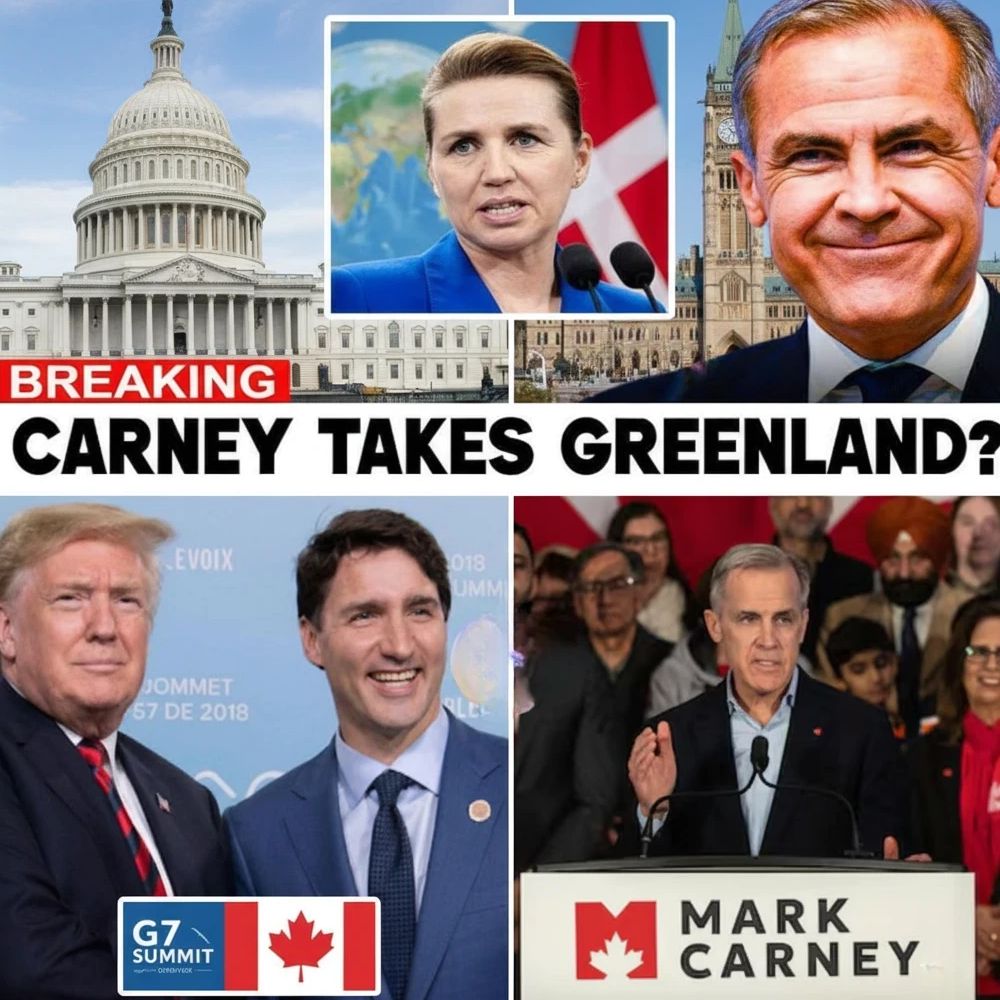
Canada’s decision to open a new consulate in Greenland has sent shockwaves through the geopolitical landscape of the Arctic, exposing the vulnerabilities of U.S. influence in the region. This diplomatic maneuver is not just routine; it signifies a strategic shift that could redefine relationships in the far north.
The consulate in Nuuk represents a calculated step by Canada to expand its diplomatic presence, a move that resonates deeply within Greenland’s political and cultural context. Greenland, an autonomous territory of Denmark, has long been the subject of international ambitions, particularly from the United States under former President Donald Trump, who openly suggested the idea of purchasing the island.
The opening of the consulate has been met with enthusiasm from Greenlandic leaders, who see it as a bridge for cooperation that acknowledges their cultural ties with Inuit communities across North America. Pelle Broberg, a member of Greenland’s parliament, expressed that the consulate signifies a long-awaited engagement that aligns with the aspirations of Greenland’s people.Canada’s commitment, underscored by the personal attendance of Minister Anita Anand at the consulate’s opening, signals a new era of Arctic diplomacy. It indicates Canada’s intent to collaborate with Greenland on economic and cultural fronts, contrasting sharply with the U.S. approach that has often been perceived as colonial and dismissive.
The implications extend beyond mere diplomatic niceties. Greenland’s leaders view this consulate as an opportunity to reshape their economic future, potentially reducing reliance on Denmark for trade. The new consulate could facilitate more efficient trade routes with Canada, aligning Greenland more closely with North American economic systems.
This development comes at a time when the Arctic is becoming increasingly contested, with global powers vying for influence over shipping routes and natural resources. The U.S., China, Russia, and Denmark are all engaged in a strategic race, and Canada’s renewed focus adds another layer of complexity to this geopolitical chess game.
Moreover, the recent tensions between Denmark and the U.S. over covert activities aimed at influencing Greenland have heightened scrutiny of American intentions in the region. Denmark’s diplomatic response to these activities reveals a growing unease with Washington’s methods, further complicating the U.S.’s standing in the Arctic.
As Canada strengthens its ties with Denmark through collaborations in clean energy and technology, the dynamics of Arctic cooperation are shifting. Canada is positioning itself as a reliable partner, contrasting with the U.S. approach that has often relied on economic pressure and unilateral actions.The opening of the consulate in Nuuk is more than a symbolic gesture; it is a strategic pivot that reflects a broader trend in Arctic relations. Greenland’s warm reception to Canada’s move highlights a desire for genuine partnership, while the U.S. risks losing its foothold in a region of increasing importance.
In this evolving landscape, Canada has emerged as a key player, ready to engage with Greenland on equal terms. The Arctic is no longer a distant frontier; it is becoming a focal point of international diplomacy, and the implications of these developments will be felt for years to come.
As the geopolitical stakes rise, the world watches closely. The Arctic is transforming, and with it, the power dynamics that have long defined the region. Canada’s decisive action has opened a new chapter in Arctic diplomacy, one that could redefine the future for Greenland and its place on the global stage.