

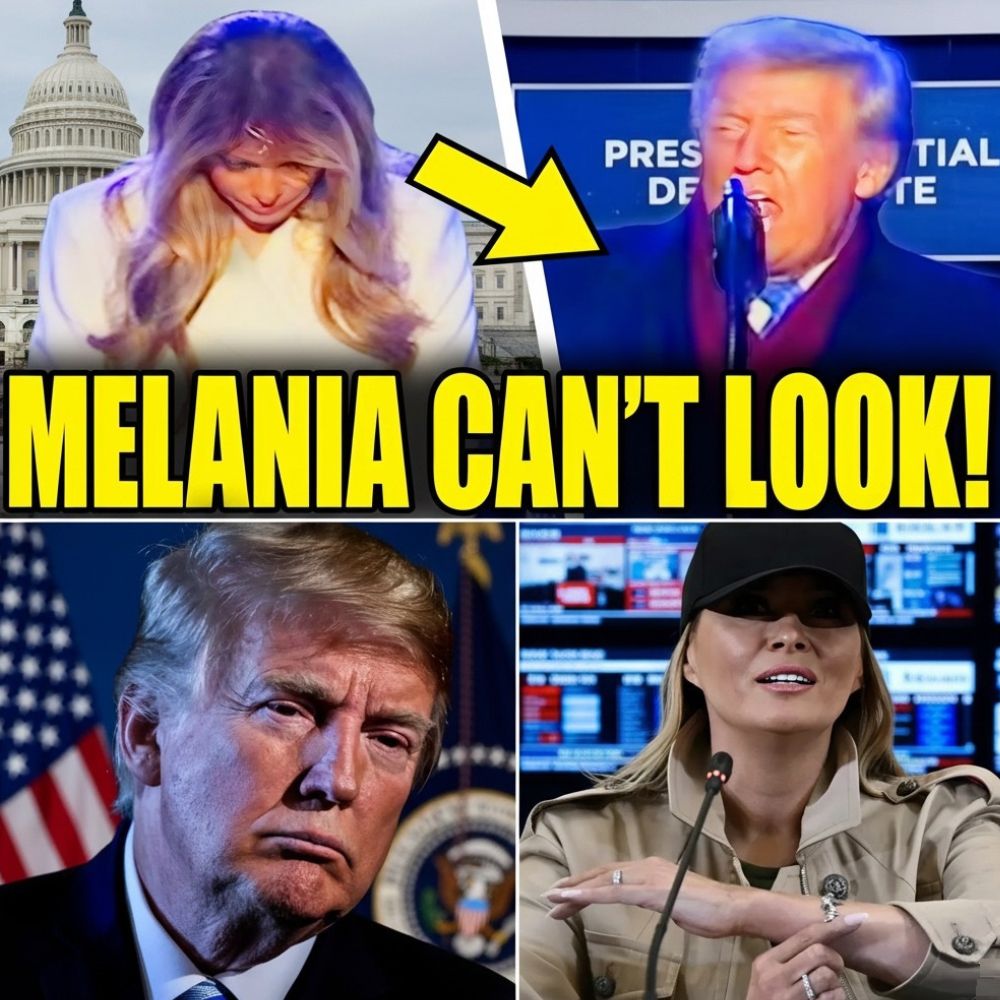
Viral Claims of Oval Office Confrontation and Trump Health Episode Spread Online, but Officials Reject Allegations
WASHINGTON — A series of sensational online posts alleging that former President Donald J. Trump was involved in a “violent fight” inside the Oval Office and later appeared disoriented in a late-night confrontation at Mar-a-Lago spread rapidly across social platforms on Tuesday, igniting a wave of political speculation even as advisers and officials dismissed the claims as baseless.
The posts — which included unverified excerpts of supposed “security notes,” anonymous staff messages, and heavily edited video clips — described a dramatic scene in which Mr. Trump allegedly shouted accusations of betrayal during a tense meeting. Some accounts went further, claiming he later appeared “slurring and stumbling” at his residence in Florida, prompting hurried responses from aides and causing panic within his inner circle.
None of these details have been corroborated by independent reporting, public records, or official statements. Still, within hours, the claims dominated trending feeds on X, TikTok, and far-right forums, demonstrating once again the volatility of political discourse surrounding the former president.
According to the viral narrative, Mr. Trump allegedly erupted during a private Oval Office discussion earlier in the day — an assertion that advisers say is impossible, given that Mr. Trump no longer works in the West Wing. The claim nonetheless gained momentum, fueled by snippets of video showing him during a nighttime appearance at Mar-a-Lago in which he appeared tired and spoke in a lower register than usual. The footage, lacking clear context or continuous audio, was shared as supposed evidence of a broader incident.
Advisers to the former president swiftly rejected the rumors. “These fabricated claims are detached from reality,” a senior aide said in a statement. “There was no confrontation, no medical emergency, and no episode resembling what is being circulated online.” The aide added that Mr. Trump had spent the day in scheduled meetings and appeared on camera later that evening for a routine address to supporters.
Despite the denials, the rumors triggered an immediate political firestorm. Progressive commentators seized on the story as symbolic of what they characterized as instability within Mr. Trump’s post-presidential orbit. Some mocked what they called a “slur-spiral,” referencing online claims that he had spoken with unusual cadence during the viral clip. Conservative voices, meanwhile, divided sharply: some dismissed the situation as “manufactured chaos,” while others speculated that the brief video signaled internal stress or exhaustion.
Researchers who monitor political misinformation were quick to note that the circulating documents — including alleged “security logs” describing “disturbing incoherence” and “sealed hallway protocols” — bore hallmarks of digital manipulation. Several images featured inconsistent fonts, mismatched time stamps, or formatting that did not align with standard White House documentation.
“This appears to be another instance in which small fragments of ambiguous footage, combined with fabricated text overlays, are being used to create a narrative of crisis,” said Dr. Maya Hernández, a misinformation expert at Stanford University. “The circulation is fast, the details are dramatic, but the evidentiary foundation is nonexistent.”
Fact-checking organizations echoed those concerns. Early analyses from multiple independent groups found no verification for the alleged emergency calls, the involvement of former First Lady Melania Trump, or reports of aides “scrambling” behind sealed doors. Several noted that key elements of the story originated from anonymous accounts with histories of publishing political hoaxes.
Compounding the frenzy were Mr. Trump’s own posts on his social-media platform. He published more than 60 messages Tuesday night, many attacking unnamed “saboteurs” and accusing political opponents of orchestrating a smear campaign. While not acknowledging the health-related rumors specifically, the volume and tone of his posts fueled further online debate. Supporters interpreted the activity as evidence of his continued vigor, while critics argued it reflected agitation.
For White House officials — who emphasized they have no involvement in the former president’s private affairs — the episode spotlighted a broader concern: the weaponization of medical rumors to destabilize political narratives. “Online speculation about a political figure’s physical condition can have real-world consequences, including heightened division and public confusion,” said a communications adviser speaking on background.
Analysts note that stories alleging sudden health events or behind-the-scenes confrontations have become increasingly common in the digital environment, especially involving high-profile leaders. These narratives often merge real video footage with unverified interpretations, creating a hybrid form of misinformation that can be difficult to counter.
By Wednesday morning, no credible evidence had surfaced to support reports of an Oval Office altercation or a medical emergency at Mar-a-Lago. Advisers said Mr. Trump had resumed a normal schedule, and members of his political team described the circulating stories as “manufactured drama.”
Still, the incident’s online footprint continues to expand, and experts warn that such narratives — once embedded in partisan discourse — can prove persistent.
“Even when a claim is thoroughly debunked,” Dr. Hernández said, “if it aligns with a group’s expectations or fears, it can continue to shape political perception long after the facts are clear.”
For now, the allegations remain unverified, leaving the latest episode as another example of the increasingly blurred boundaries between political reality, digital rumor, and online spectacle in American public life.