

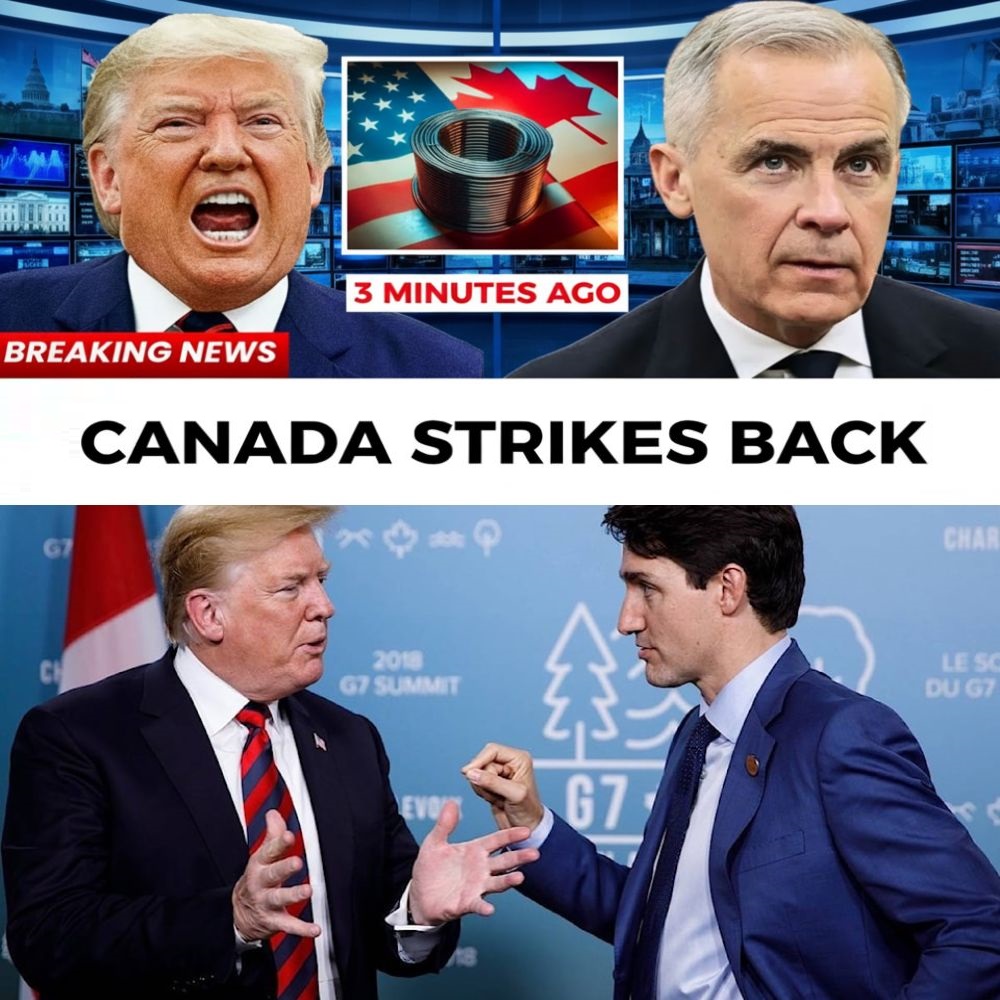
As tensions escalate between Canada and the United States, Prime Minister Mark Carney has taken decisive action to strengthen ties with the European Union. In a bold move, Carney signed a strategic defense and security partnership with the EU, signaling a pivot away from reliance on the U.S. amid rising tariffs.
The backdrop to this unfolding drama is President Donald Trump’s aggressive tariff strategy, which has placed a heavy burden on Canada’s manufacturing sector. The U.S. imposed a 25% tariff on Canadian steel and a 10% tariff on energy exports, causing significant job losses and economic strain in industrial towns across Canada.
In response to these punitive measures, Carney has made it clear that Canada will not sit idly by. He has set a deadline of July 21st for reaching a new trade agreement with the U.S. and warned that if progress is not made, Canada will implement targeted countermeasures against American goods.
The strategic partnership signed with the EU is a clear indication of Canada’s intent to diversify its economic ties. The deal encompasses defense procurement, LNG cooperation, and commitments to deepen digital trade infrastructure, effectively signaling to Washington that Canada is seeking new alliances.
Carney’s approach marks a significant shift in Canadian foreign policy, as he seeks to align Canada’s industrial policies with those of Europe. This includes discussions on nuclear energy and the development of rare Earth supply chains, further reducing Canada’s dependence on both the U.S. and China.
As the NATO summit unfolded, it became evident that Carney’s strategy was not merely reactive but a calculated move to reshape Canada’s economic landscape. While Trump continues to push for bilateral deals, Carney’s focus on long-term partnerships with the EU reflects a new reality in North American trade relations.
The stakes are high as both nations approach the July deadline. Canada’s manufacturing sector is already feeling the pressure, with layoffs reaching a five-year high and investment stalling. Carney’s government is under pressure to act decisively, and the clock is ticking.Behind closed doors, Ottawa is preparing for various scenarios, including potential retaliatory tariffs on U.S. agricultural goods and aerospace components. The message from Canada is firm: if the U.S. maintains its current stance, Canada is ready to respond. The silence from Washington following Carney’s EU partnership speaks volumes. The Canada-EU deal was not a spur-of-the-moment decision; it was months in the making and strategically timed to coincide with the U.S.-Canada trade negotiations.
As the July 21st deadline looms, both sides are bracing for what could be a pivotal moment in North American trade diplomacy. Carney’s calculated pivot towards Europe may redefine Canada’s economic future, while Trump’s unwavering tariff strategy risks alienating a key ally.
In this high-stakes game of trade negotiations, the next moves from both Ottawa and Washington will be crucial. With economic pressures mounting and the clock ticking, the question remains: who will blink first? Canada is no longer just reacting; it is actively reshaping its trade landscape, and the implications could be profound.