

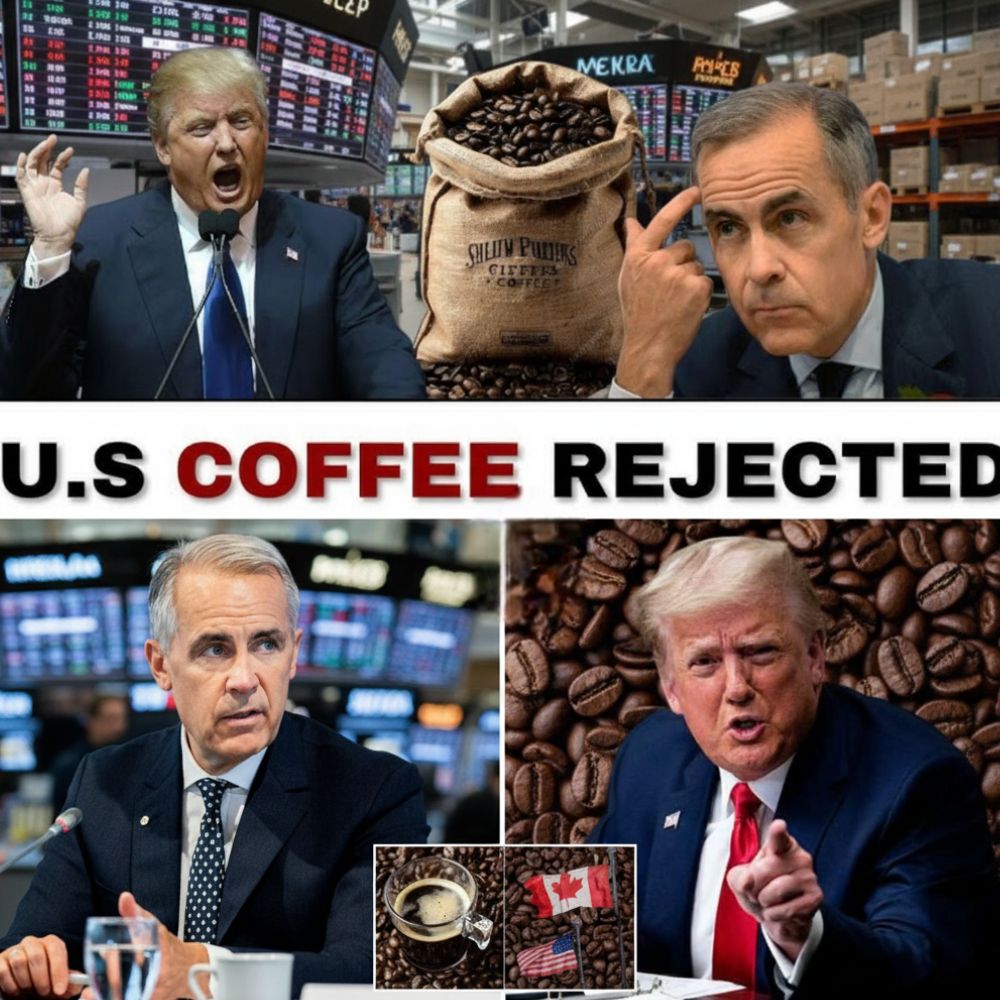
Canada has quietly seized a pivotal role in the global coffee market, outmaneuvering the United States amid a brewing trade crisis. President Trump’s recent decision to impose a staggering 50% tariff on Brazilian coffee has sent shockwaves through the industry, reshaping supply chains and altering buyer dynamics.
The U.S. assumed it could leverage its economic power to pressure Brazil, the world’s largest coffee exporter, into compliance. Instead, this political maneuver backfired, triggering chaos in the American coffee supply chain. Importers were left in disarray, contracts stalled, and shipments languished at ports, unable to clear the bureaucratic hurdles.
As prices surged and coffee became more expensive for consumers, Brazil was left disappointed but resolute. It quickly recognized its market strength and the need to diversify its buyer base. Rather than waiting for the U.S. to resolve its self-inflicted crisis, Brazil reached out to stable partners, with China and Europe stepping up with new orders.
However, the most surprising player to emerge was Canada. Lacking a domestic coffee production industry due to its inhospitable climate, Canada has instead positioned itself as a dependable buyer. Unlike the U.S., which is embroiled in political turmoil, Canada offers a reliable trade environment, free from sudden tariffs and economic threats.
As American importers struggled, Canadian companies seized the opportunity. Shipments initially destined for U.S. ports redirected northward to Canadian cities like Vancouver, Montreal, and Toronto. With every shipment, Canada reinforced its status as a stable partner, contrasting sharply with the unpredictability of U.S. trade policies.
This shift in the coffee trade is not merely a temporary adjustment. Brazil has come to appreciate the value of consistent partnerships. Even if the U.S. retracts its tariffs, the trust that Brazil has established with Canada will likely endure, reshaping the landscape of coffee imports for years to come.
Canada’s ascent in the coffee market underscores a broader truth: in a world increasingly defined by volatility and uncertainty, reliability is paramount. While the U.S. sought to assert dominance through tariffs, it inadvertently exposed its vulnerabilities.
As coffee prices stabilize and new routes are established, Canada has emerged not as a producer but as a trusted ally in Brazil’s trade network. This strategic pivot has provided Canada with a robust trade position while leaving the U.S. grappling with the consequences of its own policies.
The global coffee market has been irrevocably altered, with Canada stepping into a role that was once dominated by the U.S. This quiet yet impactful shift highlights the importance of trust in international trade—a lesson that may resonate well beyond the coffee industry.