

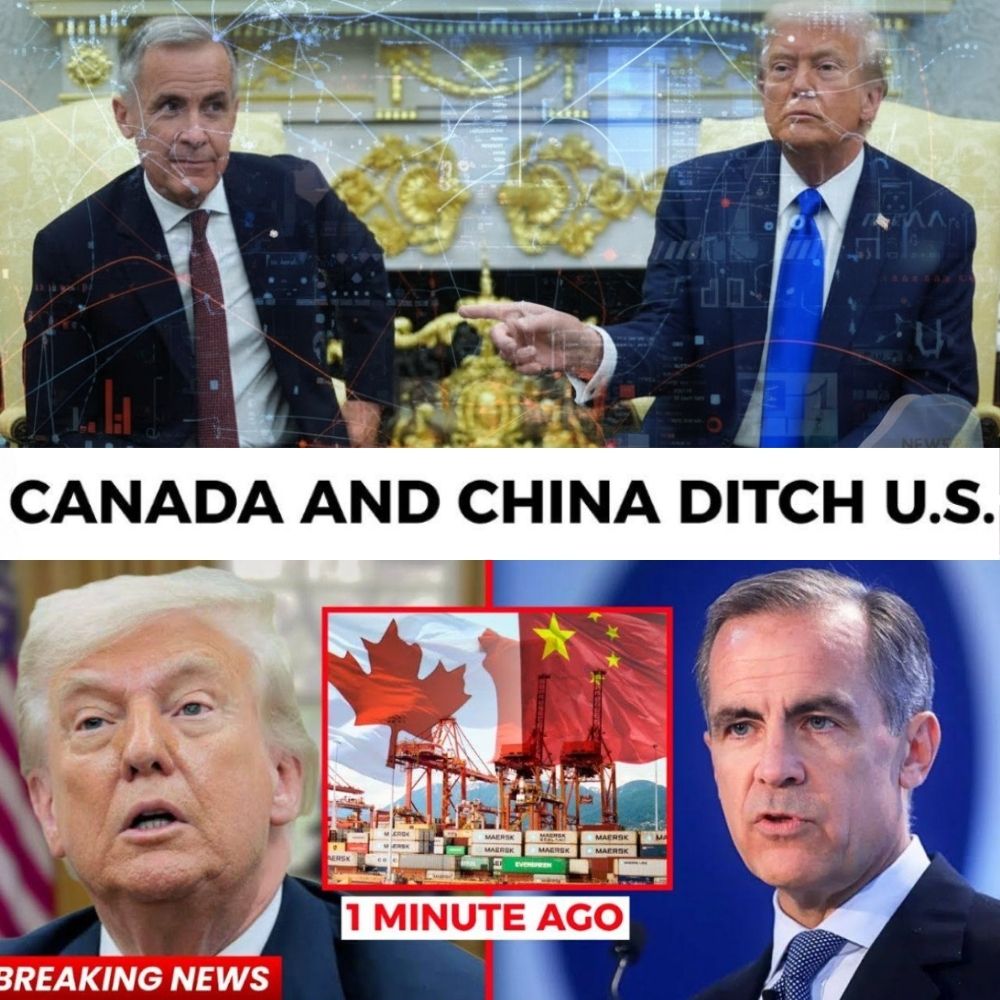
Breaking News: Trump’s Tariff Gambit Backfires as Canada Turns to China and Europe for Economic Salvation
In a stunning reversal that has sent shockwaves through global trade corridors, China’s ambassador to Canada unveiled a game-changing proposal: Beijing will drop crippling canola tariffs if Ottawa lifts its own duties on Chinese-made electric vehicles. This unexpected move threatens to upend the fragile trade equilibrium and exposes the glaring fractures in the U.S.-led tariff strategy spearheaded by former President Donald Trump.
The gambit, once hailed by Washington as a demonstration of economic strength, has exploded spectacularly, leaving the United States isolated as its closest ally begins charting an independent path. Canada, caught in the crossfire between its economic reliance on the U.S. and its need to revive vital export markets, now faces a defining moment that could redraw the North American trade map.
Months ago, Washington imposed punitive 100% tariffs on Chinese electric vehicles to protect domestic automakers from a surge of low-cost foreign competition. Canada, pressured to show solidarity, mirrored the tariffs—despite importing very few Chinese vehicles—hoping to safeguard its own intertwined automotive sector. Instead, Canada was blindsided as Beijing retaliated by slapping stifling duties on Canadian canola, slashing a $3.5 billion annual export market overnight and devastating farmers across the prairie provinces.
The fallout has been severe. Prairie farmers, once thriving on their canola harvests, now find their crops languishing in storage as prices collapse amid blocked shipments. The Canadian Canola Growers Association sounded alarms, warning government leaders the situation is unsustainable. Against this backdrop, the ambassador’s latest offer from Beijing is not just an olive branch—it is a calculated test exploiting Ottawa’s vulnerability.
Prime Minister Mark Carney’s administration is now caught in a high-stakes dilemma. Yielding to China could reopen one of Canada’s most lucrative agricultural markets and provide urgent relief to struggling farmers. However, it risks fraying North America’s fragile trade unity and jeopardizing Ontario’s pivotal automotive industry, which fears the influx of Chinese electric vehicles could undercut local manufacturing jobs tied to Detroit-based companies.
This tension underscores a more profound reality: Trump’s tariff-driven approach, designed to wield control, has accelerated economic divergence. Rather than isolating China, U.S. policies have isolated America itself, forcing allies like Canada to forge alternative relationships. In the face of escalating tariffs, Ottawa has responded not with capitulation but with strategic diversification, rapidly expanding ties with Mexico and the European Union.
In mid-September, Carney signed a sweeping new economic and security pact with Mexican President Claudia Shinbal. This partnership spans agriculture, energy, and infrastructure—providing Canadian exporters vital new avenues as doors close in China. Simultaneously, Finance Minister Francois Philippe Champagne engaged European Union officials in Denmark to enhance collaboration on critical minerals, digital trade, and clean energy, positioning Canada as a central player bridging East and West.
These diplomatic maneuvers are not mere symbolism; they signal Canada’s decisive break from Washington’s isolating trade tactics. Instead of a retreat under pressure, Ottawa is building a robust firewall of alliances. Every new Trump tariff imposed—whether on steel, aluminum, canola, or automotive sectors—has paradoxically fueled Canada’s resolve to widen its economic footprint beyond American influence.
At a recent Council on Foreign Relations event in New York, Carney underscored this strategic pivot, announcing Canada’s intention to re-engage with China on a bilateral framework despite U.S. opposition. He emphasized that while certain sensitive sectors remain off-limits, Canada will carve controlled spaces for commerce, recognizing the necessity of balance amidst conflicting superpower agendas.
This candid stance unsettled Washington, revealing the limits of Trump’s “tariff first” diplomacy, which sought to dictate terms unilaterally. Carney contrasted Canada’s commitment to robust international trade agreements with the U.S. administration’s retreat from established frameworks like the Trans-Pacific Partnership and selective adherence to the United States-Mexico-Canada Agreement (USMCA). His message was clear: Canada aims to secure its own negotiating power and influence, regardless of American pressure.
The economic implications are profound. Nearly 80% of Canada’s trade continues to flow south, yet the emerging incremental growth in Europe, Asia, and Mexico offers a blueprint for sustainable diversification. Ottawa’s new alliances promise to soften the blow of American tariffs and reshape trade dynamics in North America and beyond.
Farmers in the prairies are watching anxiously as political leaders weigh the consequences of lifting EV tariffs. For them, reopening the Chinese market could mean survival. Meanwhile, Ontario’s auto sector calls for steadfast defense of tariffs to shield domestic jobs. Their competing priorities encapsulate Canada’s broader challenge: balancing allegiance to its largest trading partner with the imperative to protect its own economic interests.
As tensions mount, the U.S. finds itself on the defensive. What was intended as a lever for dominance has evolved into a catalyst for Canadian independence. The very tariffs meant to consolidate American influence have inadvertently empowered Ottawa to reject Washington’s dictates and engage directly with Beijing and European capitals.
This unfolding saga is a cautionary tale of unintended consequences. What Trump’s administration branded as a bold assertion of American strength has fractured alliances, redefined trade loyalties, and ushered in an era where global powers navigate increasingly complex, multidirectional relationships.
For Canada, the stakes could not be higher. The outcome of this tariff showdown will determine the future of its agricultural exports, automotive industry, and geopolitical stature. Prime Minister Carney’s strategic gamble—to wield diplomacy over defiance—may well chart a course out of economic uncertainty.
In the smoke-filled corridors of trade negotiations, the message is unmistakable: the era of tariff bullies dictating terms is waning. As Canada boldly steps beyond its traditional reliance on the United States, the reverberations will be felt in Washington, Ottawa, Beijing, and Brussels alike.
The clock is ticking. With harvests stored and factories watching, Canada’s next moves could irrevocably alter the balance of power on the continent. Trump’s tariff façade has crumbled. In its place rises a new landscape of assertive diplomacy, strategic partnerships, and the unyielding pursuit of national resilience. The world is watching—and waiting.