

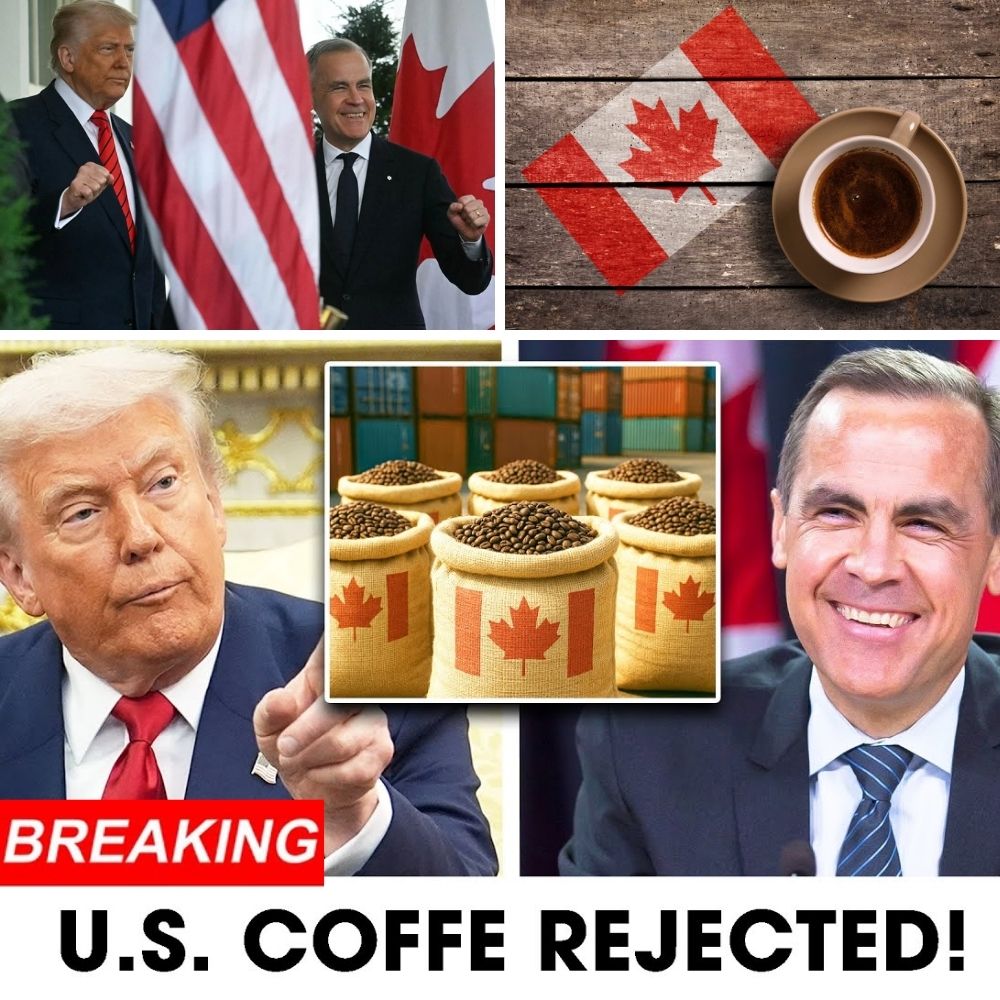
A seismic shift in global commodity trade is unfolding as Canada capitalizes on U.S. policy missteps, fundamentally realigning the world’s coffee and beef markets in a stunning display of economic realpolitik. The immediate trigger was a unilateral 50% tariff on Brazilian goods announced by the Trump administration, a move Washington believed would pressure the world’s leading coffee exporter into submission. Instead, the decision shattered decades of stable trade, sending shockwaves through global supply chains and creating a vacuum of trust that Canada has swiftly and decisively filled.
American importers descended into chaos as the tariff took hold, with wild price swings and paralyzed logistics. Thousands of tons of coffee sat stranded at U.S. ports as contracts were suspended and customs procedures stalled. For the first time in generations, American consumers and businesses faced the stark reality of an insecure coffee supply, with menu prices soaring overnight. The foundational stability of the Brazil-U.S. coffee trade, a cornerstone of the global market, evaporated in a single executive order. Brazil’s response was immediate and strategic. Refusing to concede, the nation leveraged its indispensable position as the globe’s primary coffee grower. It quickly pivoted to deepen ties with reliable partners, securing massive new import orders from China and long-term supply contracts across Europe. This rapid diversification exposed a critical American miscalculation: the global economy needs Brazilian coffee far more than Brazil needs any single, unpredictable buyer.
The most consequential shift, however, emerged from the north. Canada, a top coffee-consuming nation despite its climate, moved with quiet precision. While the U.S. market convulsed, Canadian importers presented themselves as stable, rule-respecting partners. Without fanfare or political threats, they offered Brazil the predictability Washington had destroyed. Shipments once destined for Houston and New York began rerouting to Vancouver, Montreal, and Toronto.
Canadian ports, where commerce is not held hostage to political whims, became new hubs of reliability. Each seamless transaction reinforced a powerful new dynamic. Canada accumulated the most valuable currency in a crisis: trust. It positioned itself not as a producer, but as the world’s most dependable buyer, securing stable prices and abundant supply while American shelves grew sparse and costs skyrocketed. Parallel to this coffee crisis, a nearly identical drama erupted in the North American beef trade, further cementing Canada’s rising role. In a direct retaliation to U.S. tariffs, Ontario rejected over 150,000 tons of American beef, a headline-grabbing move with profound implications. This was not a symbolic gesture but a strategic strike that signaled a loss of confidence in U.S. trade reliability.
The rejection sent shockwaves through global markets, prompting key importers like Japan, Germany, and the UAE to reassess their dependence on American beef. U.S. ranchers faced immediate hardship as storage facilities filled, shipments were canceled, and profit margins collapsed. The U.S.’s reputation for stable, high-quality beef exports, built over decades, began to erode.
Seizing the opportunity, Canada’s beef sector accelerated negotiations and expanded its footprint in Asian and European markets once dominated by its southern neighbor. International buyers, now prioritizing supply chain certainty, increasingly turned to products stamped with the Canadian maple leaf. The nation’s consistent quality and predictable trade policy became a formidable advantage.
This one-two punch in coffee and beef illustrates a profound transformation in global trade dynamics. The United States, by wielding tariffs as a blunt political instrument, inadvertently exposed its own vulnerabilities and undermined the trust that underpins long-term supply relationships. The assumption that suppliers and consumers had no alternative proved catastrophically false. Canada, in contrast, demonstrated that in an unstable world, being a predictable and respectful partner constitutes a powerful form of economic power. It did not need to grow coffee or dramatically increase its cattle herds; it simply needed to be the adult in the room, offering the stability that Brazil and other global suppliers desperately sought.
The repercussions are deep and lasting. Global shipping routes are being reconfigured, contract negotiations are prioritizing policy stability over price alone, and a fundamental realignment of North American export influence is underway. Even if the U.S. tariffs are reversed, the restored trade flows will likely never regain their previous dominance.
The trust that evaporated in the wake of political uncertainty has permanently migrated. Brazil has secured a more diversified and resilient customer base, insulating itself from future unilateral actions. Canada has emerged with strengthened trade relationships and a formidable new reputation as a cornerstone of reliable commerce.
This episode serves as a stark lesson in global economics. Power is no longer solely derived from market size or military might, but increasingly from the perceived stability and integrity of a nation’s word. While the United States chased dominance through confrontation, Canada patiently accumulated the trust of its partners, and in doing so, quietly reshaped the landscape of two major global industries.
The long-term question is whether this represents a permanent inflection point. Can the United States rebuild the eroded confidence of global partners, or will Canada and other stable economies continue to ascend by offering a safer harbor for trade? For American consumers paying more for their morning coffee and for ranchers with stranded cattle, the new reality is already painfully clear. In today’s volatile world, reliability is the ultimate strategic commodity, and Canada has just secured a massive reserve.