

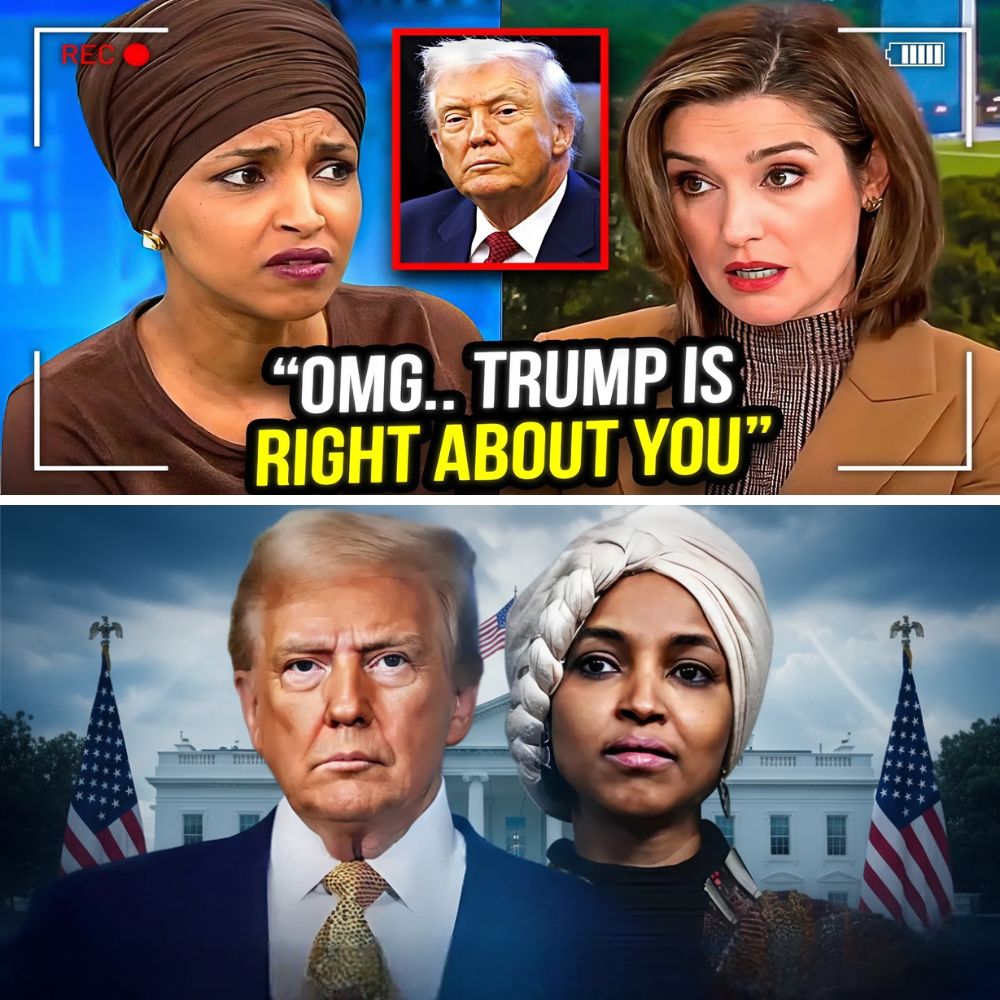
BREAKING: Ilhan Omar Under Fire as Treasury Probe Explodes — Fraud, Terror Links, and a CBS Interview That Shook Washington
A tense and revealing moment unfolded on national television as Rep. Ilhan Omar faced mounting scrutiny over one of the largest welfare fraud scandals in U.S. history. What began as a routine interview on Face the Nation quickly escalated into a political firestorm after the Trump administration’s Treasury Department confirmed an active investigation into massive wire fraud tied to Minnesota’s welfare system — and possible overseas money transfers now under review. The implications stretch far beyond one lawmaker, threatening to reshape policy, politics, and public trust.
At the center of the controversy is a fraud scheme that federal prosecutors have already described as the largest COVID-era welfare scam in the country, involving more than a billion dollars in stolen taxpayer funds. According to the Treasury Secretary, the scheme was initially uncovered by the IRS Criminal Investigation unit and involved unregulated wire transfer networks that allegedly moved money overseas, including to Somalia and the Middle East. While officials emphasized that no conclusions have yet been reached, the confirmation of an ongoing investigation alone sent shockwaves through Washington.
The situation grew more explosive when Treasury officials stated that the investigation includes tracing where the stolen money ultimately went — a comment that House Republicans quickly seized upon, raising the possibility of links to terrorism financing. While no evidence has yet been presented publicly to support that claim, the mere existence of the inquiry has intensified pressure on Minnesota’s political leadership and federal agencies that oversaw the programs involved.
Rep. Omar, whose district includes a large Somali-American population, was directly confronted with allegations that individuals connected to her campaign had been involved in the fraud. Omar denied wrongdoing, stating that campaign donations tied to implicated individuals were returned years ago and emphasizing that she had previously urged authorities to investigate irregularities in the program. However, the interview revealed visible strain as the scale of the fraud — involving dozens of defendants, most of Somali descent — was laid out in stark detail.
Critics argue that Omar’s responses exposed deeper contradictions. At various points, she suggested both that warning signs were missed and that alarms had been raised but ignored. The discussion also turned to whether Minnesota’s Democratic-led state government failed to adequately police itself, allowing the fraud to spread unchecked for years. Even the CBS host pressed the issue, questioning whether political fear of alienating a specific community had contributed to regulatory paralysis.
The fallout is not limited to criminal prosecutions. Federal officials have already indicated that new Medicare and Medicaid policies specific to Minnesota are under consideration, signaling broader consequences for social programs statewide. Declining public confidence in oversight mechanisms could lead to stricter controls, slower approvals, and reduced funding — outcomes that would affect vulnerable communities far beyond those implicated in the fraud.
Tensions escalated further when Omar addressed comments made by Trump immigration adviser Stephen Miller, comparing his rhetoric to that used by Nazis in pre-war Germany. The remark triggered immediate backlash online and raised the possibility of legal action, as critics accused Omar of defamation and inflammatory rhetoric. The exchange underscored how the controversy has expanded beyond fraud into a wider cultural and political battle over immigration, assimilation, and national identity.
As investigations continue, the stakes are rising on multiple fronts. For the Trump administration, the case reinforces its argument for stricter oversight, tougher immigration controls, and aggressive fraud enforcement. For Democrats, it presents a political vulnerability at a time when public concern over government accountability is intensifying. And for ordinary Americans, the scandal raises a troubling question: how could such an enormous sum vanish without triggering decisive action sooner?
One thing is clear — this story is far from over. With federal agencies tracing money flows, lawmakers demanding answers, and public trust hanging in the balance, the Ilhan Omar interview may be remembered as the moment a long-simmering scandal finally erupted into full view. Whether it leads to sweeping reforms or deeper political division, Washington is bracing for what comes next.