

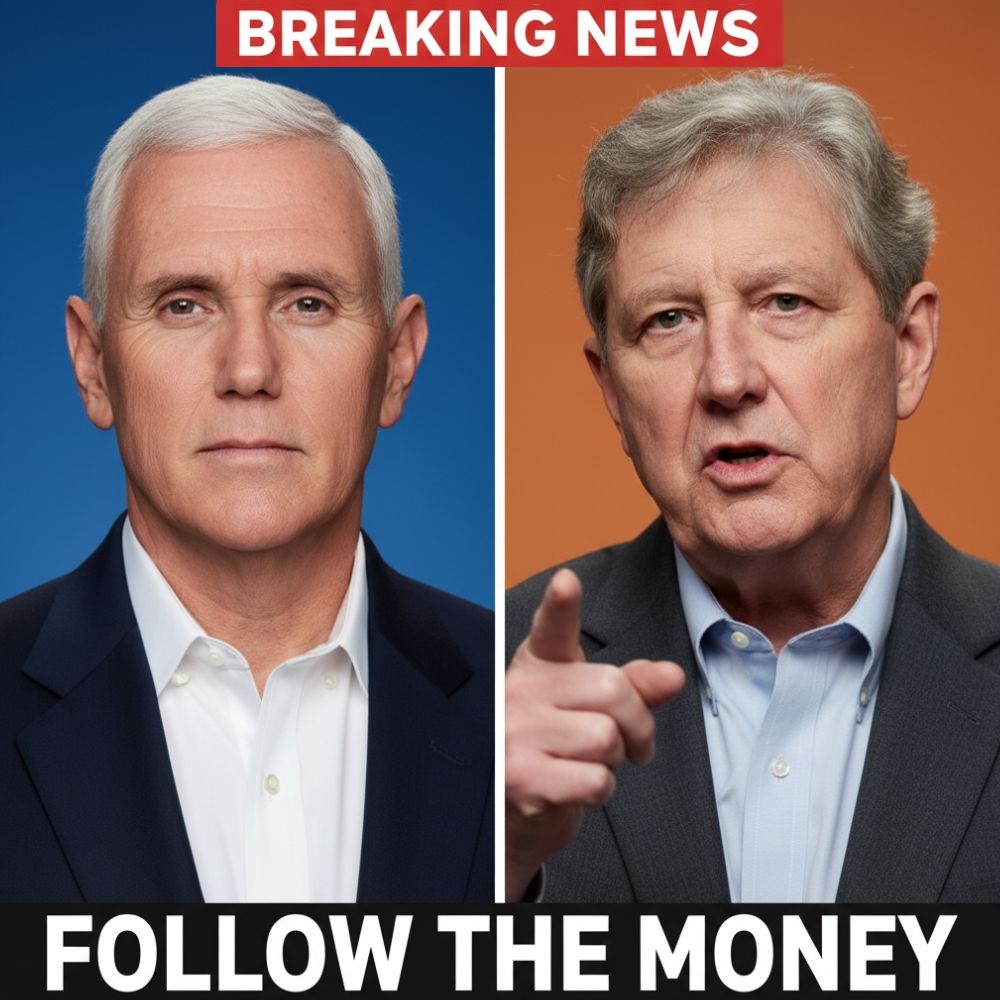
Washington is used to noise. Press conferences, leaked talking points, dramatic floor speeches designed for clips rather than consequences. This time, there was none of that. No countdown. No spotlight. Just a piece of legislation quietly introduced—and suddenly, the capital’s most powerful donors are paying very close attention.
Senator John Kennedy’s latest proposal doesn’t announce itself with fiery rhetoric. It doesn’t need to. Instead, it reaches back to one of the most feared tools in federal law enforcement history: the Racketeer Influenced and Corrupt Organizations Act, better known as RICO. The same statute once used to dismantle mafia families and criminal syndicates is now being floated as a weapon against billionaire-backed protest networks that descend into violence and chaos.
The idea is deceptively simple, and that is precisely why it has landed with such force.
Under the proposal, if prosecutors can demonstrate that wealthy donors knowingly coordinated funding streams that enabled criminal activity—arson, riots, organized violence—those financial pipelines could be treated not as political activism, but as organized crime. The consequences would be immediate and severe: frozen assets, locked accounts, and abrupt financial paralysis, potentially before years-long court battles play out.
Supporters say the measure is long overdue. Critics say it’s a legal nuclear option.
At the heart of the debate is a question Washington has largely avoided for years: where does protest funding end, and criminal responsibility begin?
Kennedy’s allies argue that the line has already been crossed. They point to episodes of unrest where protests devolved into destruction, claiming that money didn’t just “support causes,” but allegedly helped organize, sustain, and escalate lawbreaking on the ground. If coordination exists, they argue, then intent can no longer hide behind slogans.
In their telling, this isn’t about silencing dissent. It’s about accountability. “If mob bosses can’t claim innocence because they never pulled the trigger, why should elite donors get a pass when their money allegedly fuels criminal chaos?” one supporter asked privately.
Critics see something far darker. Civil liberties groups warn that weaponizing RICO in the political sphere risks turning law enforcement into a tool of ideological punishment. They argue the bill blurs the line between lawful protest support and criminal conspiracy, opening the door for selective prosecution. Today it’s one set of donors, they say. Tomorrow it could be anyone with an unpopular cause.
And then there’s the name everyone is already whispering.
While the legislation does not single out individuals, donors tied to George Soros have quickly become part of the conversation—fairly or not. To supporters of the bill, Soros represents the archetype of elite political funding that operates at massive scale and long distance. To critics, invoking his name is a shortcut to outrage, designed to inflame rather than inform.
What makes the proposal especially unsettling to Washington insiders is not what it does explicitly say, but what it implies. RICO cases don’t move slowly once they begin. Asset freezes can happen fast. Financial pressure arrives before verdicts. The shock, not the sentence, often does the most damage.
So far, nothing has been seized. No accounts have been locked. No donors have been formally accused under the framework Kennedy proposes. But the signal has already been sent. In a city built on anticipation, that may be enough.
Quietly, conversations are changing. Legal teams are reviewing donation structures. Advocacy groups are reassessing how closely they coordinate with on-the-ground organizers. The assumption that political money exists in a protected bubble is suddenly less certain.
Whether the bill advances or stalls, its impact is already visible. It has forced a reckoning Washington wasn’t ready for: the possibility that funding unrest could carry consequences not just in the court of public opinion, but in federal court as well.
Supporters frame it as a necessary course correction. Critics call it political warfare disguised as law enforcement. Both sides agree on one thing—the old rules may be shifting.
In a town that usually telegraphs its moves loudly, the silence surrounding this one may be the most unsettling sound of all.