

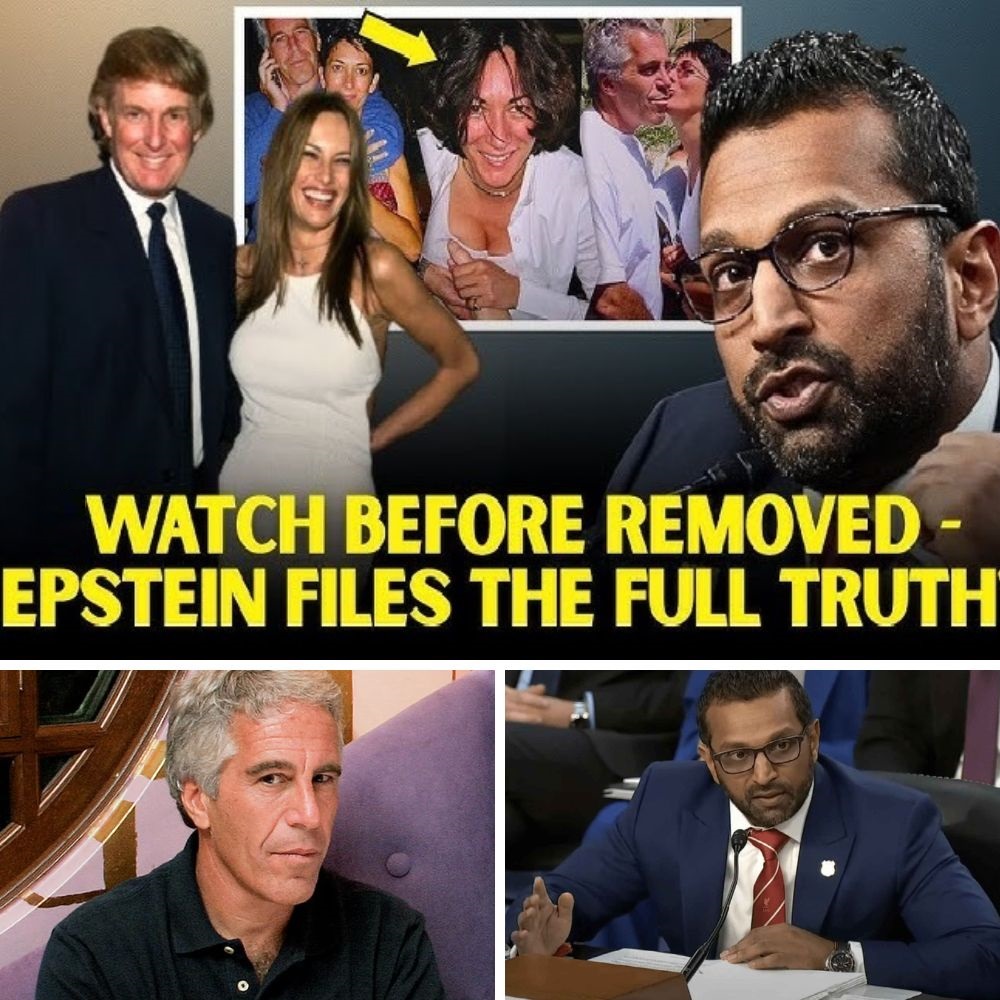
Washington, D.C. — After months of speculation and mounting public pressure, FBI Director Kash Patel has finally broken his silence on one of the most controversial subjects in recent memory: the Jeffrey Epstein “black book” and the alleged disappearance of key evidence. His comments, while aiming to clarify, have instead ignited fresh debate about transparency, accountability, and the true scope of the Epstein case.
Speaking before Congress earlier this year, Patel insisted that the FBI had “released all material legally permitted for public disclosure” related to Epstein and his network. “There is no credible information — none — that Jeffrey Epstein trafficked young women to anyone besides himself,” Patel stated, defending the Bureau’s handling of the files. His testimony was intended to close the chapter on years of conspiracy theories surrounding Epstein’s infamous contact book — but it seems to have done the opposite.
The so-called “black book” has long been a symbol of mystery and suspicion. It reportedly contained the names of hundreds of powerful figures, from business executives to politicians and celebrities. Patel maintains that an index of the book has been made public, but critics argue that the released documents are heavily redacted, concealing critical details about who knew Epstein and to what extent. Lawmakers and victims’ advocates have accused the FBI of selectively disclosing information and withholding key evidence that could reveal the full truth.
The controversy deepened when former Florida Attorney General Pam Bondi announced that a “truckload of evidence” related to Epstein’s operations had recently been delivered to FBI headquarters — much of which, she claimed, had never been fully processed or released. Bondi’s statement reignited suspicions that the Bureau still possesses files implicating influential individuals, fueling a public outcry for greater transparency. Patel, however, insists that legal barriers — including sealed court orders and victim privacy protections — prevent full disclosure of certain materials.
During a heated exchange in a House oversight hearing, Representative Jamie Raskin accused Patel of “reversing course” on his earlier promises of openness. Raskin pressed Patel on why the FBI had not produced a full, unredacted version of Epstein’s contact lists and travel records. Patel responded sharply, saying he would “not break the law” to satisfy public curiosity, and reiterated that his agency’s actions were consistent with federal privacy and evidence-protection rules.
For many Americans, Patel’s explanations ring hollow. His earlier remarks — made before he became FBI director — had hinted at broader corruption and the existence of a “client list” that could implicate high-profile individuals. Now, his more cautious language and emphasis on legal restrictions have left critics wondering whether the Bureau is protecting the powerful rather than the public.
What remains clear is that the Epstein saga is far from over. Despite Patel’s assurances, questions linger about missing pages, undisclosed evidence, and why some files remain sealed decades after Epstein’s crimes first came to light. Victims’ advocates continue to demand full transparency, arguing that justice cannot be served until every name, record, and transaction tied to Epstein is brought to light.
Kash Patel’s decision to address the issue was meant to calm speculation, but it may have done the opposite. By acknowledging the existence of unreleased materials while insisting his hands are tied, Patel has reignited public distrust in the institutions meant to uphold the law. The black book may have been partially opened — but for many, the truth still feels locked away.