

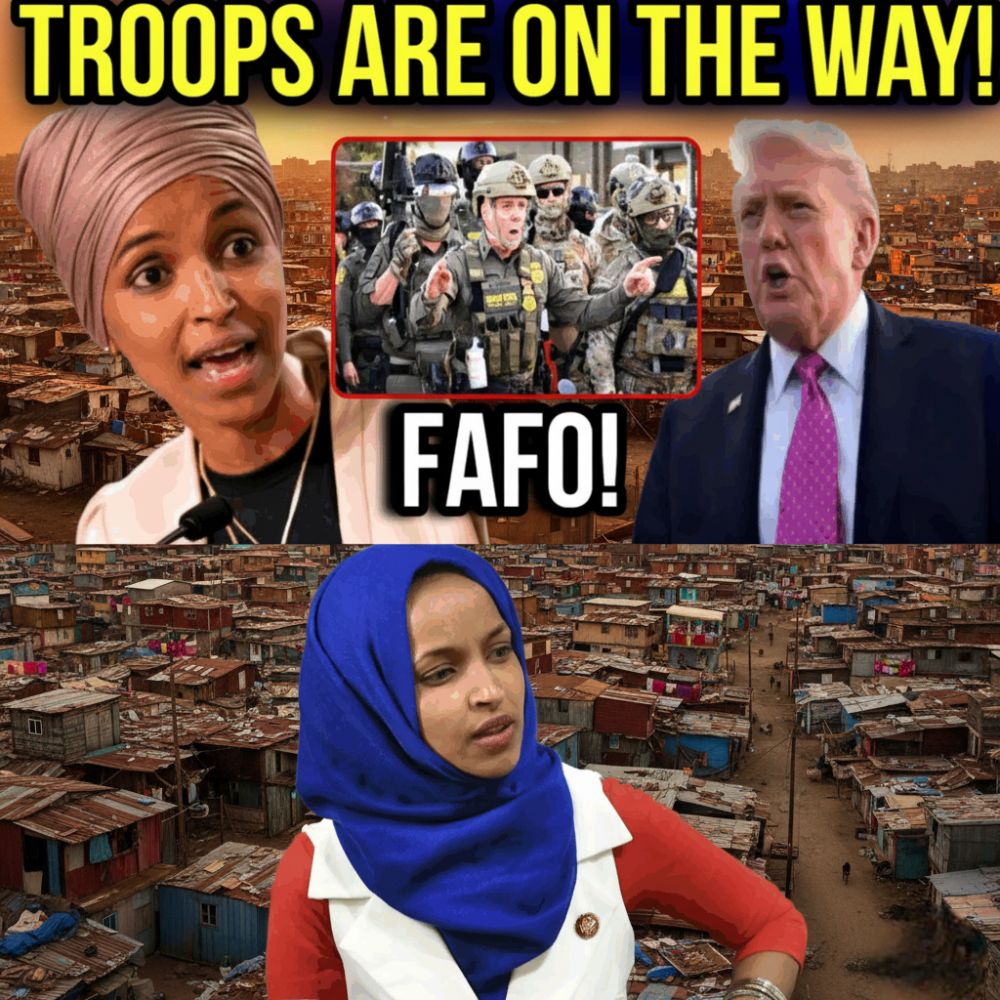
Ilhan Omar Faces Backlash Amid Allegations of Fraud and Terrorism Links in Minnesota
Introduction
In a shocking turn of events, Congresswoman Ilhan Omar has found herself at the center of a storm as allegations surface regarding fraudulent activities linked to the Somali community in Minnesota. The accusations claim that taxpayer money, intended for autism services, is being funneled back to Somalia and potentially ending up in the hands of the terrorist group al-Shabaab. As former President Donald Trump and his supporters seize upon these allegations, Omar’s responses have raised eyebrows and ignited fierce debates about immigration, accountability, and the implications of these claims for the Somali community.
The Allegations Unfold
The controversy began when Trump accused the Somali community of engaging in fraudulent activities related to autism claims. He alleged that Minnesota taxpayers are unwittingly supporting terrorism by allowing funds to flow through fraudulent claims back to Somalia. Trump’s statements, while incendiary, have drawn attention to a broader issue that has been simmering beneath the surface in Minnesota—a state that is home to one of the largest Somali populations in the United States.
According to reports, the Minnesota Medicaid program, specifically its Housing Stabilization Services (HSS) for autism therapy, has seen a dramatic increase in costs and providers in recent years. From a mere $2.6 million in 2020, costs skyrocketed to over $100 million by 2024, raising concerns about the integrity of the program. Reports indicate that some members of the Somali community are accused of exploiting this system, recruiting families to falsely diagnose their children as autistic in order to access government funds.
The Role of Ilhan Omar
As a prominent figure in the Somali community and a vocal advocate for immigrant rights, Ilhan Omar’s position has made her a target for criticism. In response to Trump’s allegations, Omar has vehemently denied any wrongdoing, asserting that there is no evidence supporting the claims that taxpayer money is being funneled to terrorist organizations. She emphasized that blaming an entire community for the actions of a few individuals is not only unjust but also harmful.
Omar’s statements reflect her commitment to defending her constituents, but they have also drawn skepticism from critics who argue that her responses lack accountability. Many believe that her political connections may shield her from facing the full consequences of the allegations, further fueling the narrative of entitlement and privilege that surrounds her.
The Broader Context of Fraud Allegations
The allegations of fraud within the Somali community in Minnesota are not isolated incidents. They reflect a larger pattern of concerns about the misuse of government resources and the potential exploitation of social welfare programs. Reports suggest that the rise in autism claims is linked to organized efforts to defraud the system, with families being incentivized to participate in schemes that ultimately harm the integrity of essential services.
Critics argue that such fraudulent activities undermine public trust in social programs designed to help vulnerable populations. The ramifications extend beyond financial losses; they also impact the perception of immigrant communities and contribute to the stigmatization of groups already facing discrimination.
Trump’s Response and Political Fallout
Trump’s response to the allegations has been swift and forceful. He has called for a crackdown on what he describes as a “scam” that is draining taxpayer dollars and threatening national security. His rhetoric has resonated with a segment of the population that is frustrated with perceived government inefficiencies and the misuse of public funds.
As the political landscape becomes increasingly polarized, Omar’s supporters are rallying to her defense, arguing that the allegations are part of a larger campaign to discredit her and the Somali community. They assert that the focus on fraud is a distraction from more pressing issues, such as systemic racism and the challenges faced by immigrants in the U.S.
Community Reactions
The Somali community in Minnesota is grappling with the fallout from these allegations. Many individuals are concerned that the negative attention will overshadow their contributions to society and reinforce harmful stereotypes. Community leaders are calling for transparency and accountability, urging members to report any fraudulent activities while also emphasizing the importance of supporting legitimate social programs.
In response to the allegations, several community organizations have launched initiatives aimed at increasing awareness about the proper use of social services and ensuring that families understand the eligibility requirements for programs like HSS. These efforts are crucial for rebuilding trust and demonstrating that the community is committed to integrity and accountability.
The Impact on Immigration Policy
The unfolding scandal has broader implications for immigration policy in the United States. As discussions around immigration reform continue, allegations of fraud can fuel anti-immigrant sentiments and lead to calls for stricter regulations. Critics argue that such narratives can overshadow the positive contributions of immigrant communities and hinder efforts to create inclusive policies.
Omar’s situation serves as a reminder of the complexities surrounding immigration and the need for nuanced discussions that consider the diverse experiences of immigrants. While it is essential to address issues of fraud and misuse of resources, it is equally important to recognize the challenges faced by immigrant communities and work towards solutions that promote their well-being.
Conclusion
The allegations against Ilhan Omar and the Somali community in Minnesota represent a significant moment in the ongoing debate over immigration, accountability, and social welfare programs. As the political landscape continues to evolve, it is crucial to engage in meaningful discussions that address the complexities of these issues while promoting understanding and collaboration.
Omar’s responses to the allegations will undoubtedly shape her political future, but they also highlight the broader challenges faced by immigrant communities in the United States. It is imperative for all stakeholders to work together to ensure that social programs are protected from exploitation, while also fostering an environment of inclusivity and support for those who contribute positively to society.
As the investigation into the allegations unfolds, the Somali community and its advocates must remain vigilant, ensuring that their voices are heard and that the narrative surrounding their experiences is not defined solely by the actions of a few individuals. In doing so, they can help pave the way for a more equitable and just society for all.