

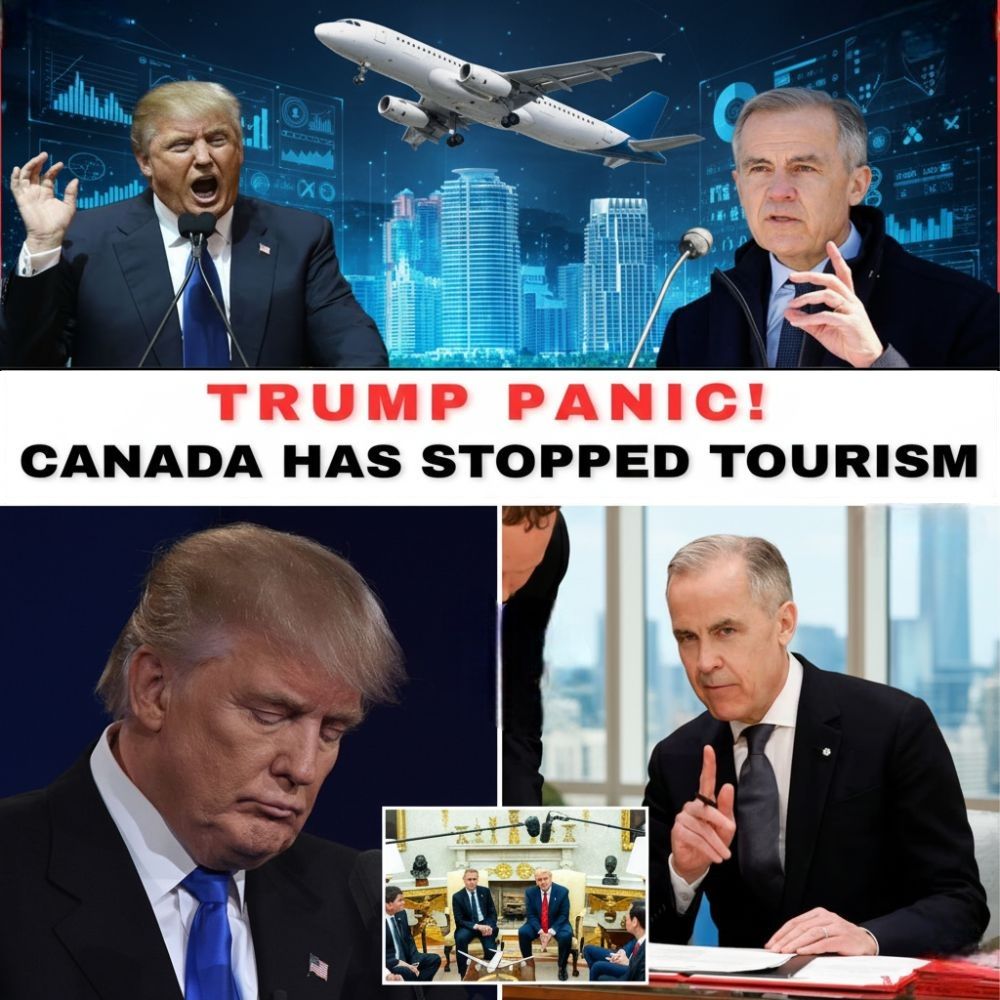
“U.S. SHOCKED as CANADIAN BOYCOTT WIPES $5.7 BILLION FROM AMERICAN TOURISM OVERNIGHT!”
In a startling revelation, newly released travel data indicates that a silent boycott by Canadians has obliterated an estimated $5.7 billion from the U.S. tourism sector, particularly impacting hotspots like Las Vegas. As the repercussions of Donald Trump’s trade war continue to unfold, the once-thriving relationship between the United States and Canada is showing alarming signs of strain, with tens of millions of Canadians opting to forgo travel to their southern neighbor.
Last year, Canadians made over 20 million visits to the U.S., spending more than $20 billion. However, projections for this year show that number plummeting to just 15.7 million visits, a staggering drop that equates to the population of Toronto vanishing from U.S. hotels, restaurants, and attractions. This dramatic decline is not merely a statistical anomaly; it signals potential trouble ahead for the U.S. economy, particularly in sectors reliant on cross-border tourism.
The roots of this boycott can be traced back to escalating tensions between the two nations, beginning with trade tariffs introduced by Washington. These measures, intended to protect American industries, were perceived by many Canadians as an affront to a longstanding partnership built on trust and cooperation. The political climate has further deteriorated, with inflammatory rhetoric suggesting Canada could become the 51st state and reports of increasingly hostile border experiences. Long lines and extensive questioning at border crossings have contributed to a growing perception among Canadians that they are unwelcome in the U.S.
As a result, Canadians are rethinking their travel plans, diverting vacations to Europe, Mexico, or domestic destinations. This shift is not marked by loud protests but rather a quiet withdrawal that reverberates through empty hotel rooms and quiet tourist streets. The U.S. Travel Association has reported that inbound tourism spending is expected to fall by over 3% this year, with Canada being a primary factor in this downturn.
The impact on American businesses is immediate and severe. Restaurants that once thrived on Canadian clientele are now eerily quiet, and hotels are either cutting staff or closing sections of their operations. Local shops and small attractions are feeling the economic pinch as what was once a reliable revenue stream has turned into uncertainty. Cities and states are attempting to counter this trend with initiatives like the Canadian Welcome Pass in Montana, which offers discounts to Canadian travelers, and symbolic gestures such as Burlington, Vermont’s renaming of a street to Canada Street. However, these efforts may not be enough to restore lost trust.
Surveys indicate that many Canadians remain wary of traveling to the U.S., influenced by political rhetoric and border tensions. The climate of uncertainty has overshadowed the once-welcoming nature of cross-border travel, leading many to avoid the U.S. altogether. This silent boycott is more than a financial issue; it reflects a deeper sense of pride and trust that has been eroded over time.
Political leaders are acutely aware of the stakes involved. When pressed about the decline in Canadian tourism, President Trump acknowledged the enduring goodwill between the two nations but failed to address the root causes of the issue. Economists caution that it may take years—potentially until 2029—for Canadian tourism numbers to rebound to pre-pandemic levels, with the burden of this decline falling heavily on the absence of Canadian visitors.
While upcoming events like the FIFA World Cup and America’s 250th anniversary may provide temporary boosts to tourism, they cannot repair the trust and goodwill that have been lost amidst political tensions. The situation illustrates the fragile nature of international relationships, where economic, political, and human perceptions intersect in complex ways.
Every canceled Canadian trip represents a lost opportunity for American workers and small business owners who rely on tourism. The human stories behind these statistics—families whose vacations were canceled, couples who postponed weekend getaways—underscore the emotional toll of political decisions. The U.S. is now grappling with the financial repercussions of a neighbor that has quietly withdrawn, highlighting the profound impact of strained relations.
As Canada and the United States look to navigate this challenging landscape, the future of their relationship hinges on diplomacy, leadership, and the rebuilding of trust. The silent boycott may continue to shape the economic and cultural connections between these two nations, with implications that extend far beyond tourism and revenue. This is a pivotal moment that could redefine the bond shared by the U.S. and Canada for generations to come.