

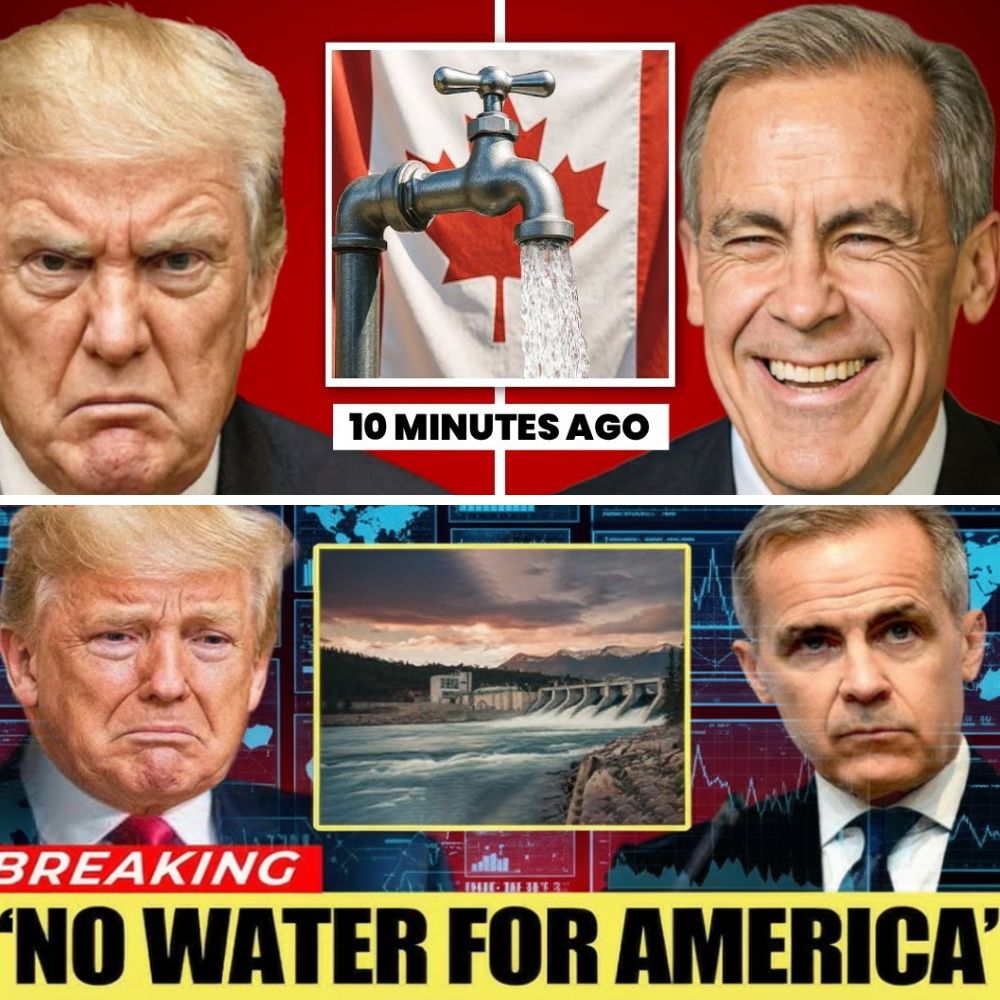
In a striking escalation of tensions between the United States and Canada, President Donald Trump has made a controversial demand for access to Canada’s freshwater reserves, igniting fears of an impending resource conflict. Amidst California’s severe drought and dwindling water supplies, Trump suggested that water from British Columbia could be diverted to the Golden State, framing it as a matter of “fair partnership.” However, Canada’s response was swift and unequivocal, with Mark Carney, a prominent Canadian economist and former governor of the Bank of England, declaring that “Canada’s water is not for sale.”
This bold assertion from Carney underscores the gravity of the situation. Canada possesses nearly 20% of the world’s freshwater supply, a critical resource that is increasingly under threat as climate change exacerbates drought conditions in the U.S. The Colorado River is shrinking, and Lake Mead is facing unprecedented low levels, leading to a desperate search for alternative water sources in the American West. Trump’s comments have resonated deeply in both countries, not only highlighting the urgent need for water but also raising alarms about the potential commodification of this vital resource.
Carney’s refusal to entertain the notion of water exports is rooted in both environmental and strategic considerations. He argues that exporting vast quantities of water could have devastating ecological impacts, jeopardizing Canada’s lakes and rivers and setting a dangerous precedent for global water management. The fear is that if Canada begins to sell its water, it could open the floodgates for other countries to follow suit, transforming water from a fundamental human right into a market commodity.
In contrast, Trump’s administration views this as an opportunity to address the escalating water crisis facing states like California, Arizona, and Nevada. Behind the scenes, U.S. lobbyists are already advocating for infrastructure projects that would enable large-scale water transfers from Canada, a move that many Canadians perceive as a direct threat to their sovereignty and natural resources. The sentiment among Canadians is clear: the idea of diverting their water south feels like a violation of their environmental integrity and national identity.
As Canada invests billions into water conservation and climate resilience, Carney’s stance is not merely a political maneuver; it reflects a commitment to sustainability and a desire to protect the country’s ecological heritage for future generations. The ongoing droughts and water shortages in the U.S. are intensifying pressures on Canada, but Carney’s firm declaration signals that Canada is prepared to defend its water resources against external demands.
This situation is emblematic of a larger trend as climate change leads to resource scarcity, prompting nations to reconsider their water management strategies. The potential for “water wars” looms large on the horizon, and as the U.S. grapples with its water crisis, the stakes are higher than ever. The dynamics of U.S.-Canada relations may be shifting, and the implications of this water dispute could redefine trade agreements and resource sharing in the years to come.
As the conversation around water continues to evolve, it remains to be seen whether future U.S. leaders will press for negotiations or if Canada will maintain its resolute stance. What is clear is that this emerging conflict over water is not just about lakes and rivers; it speaks to broader issues of sovereignty, environmental stewardship, and the fundamental rights of nations to control their natural resources. As climate change accelerates, the value of water—and the power dynamics surrounding it—will only grow more significant.