

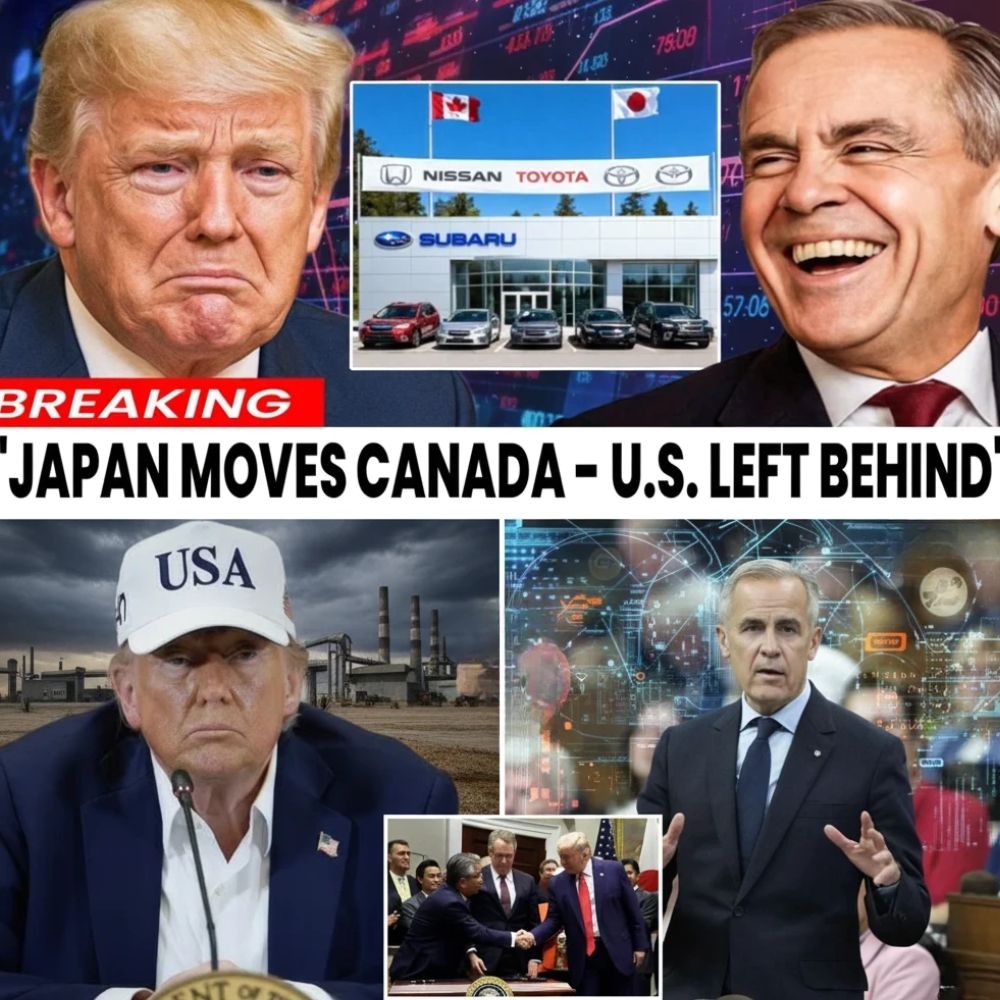
Japanese automakers are quietly retreating from the U.S. market, a strategic shift that could reshape the North American automotive landscape, with Canada emerging as the unexpected winner. As President-elect Donald Trump signals a new era of protectionist trade policies, Japanese companies are reassessing their long-standing ties to American manufacturing, opting instead for the stability offered by Canada’s favorable trade agreements.
The automotive industry is at a crossroads. Subaru’s recent announcement that it will cease production of its popular Outback model for the Canadian market at its Indiana plant is a stark indicator of the changing dynamics. The company will shift production back to Japan, a move driven by the economic realities of rising tariffs and a more favorable trade environment in Canada. This decision is not an isolated incident; it reflects a broader trend among Japanese automakers, including Toyota and Honda, who are redirecting their operations northward.
The implications of this shift are profound. Tariffs imposed by the Trump administration have increased the cost of exporting vehicles to the U.S., with some estimates suggesting that Japanese manufacturers are losing nearly $25 billion annually due to these trade barriers. The introduction of tariffs as high as 49% on cars from Japan has forced companies to reconsider their operational strategies. In contrast, Canada’s free trade agreement with Japan allows for tariff-free vehicle movement, making it an increasingly attractive option for Japanese automakers.
As these companies adapt to the changing landscape, they are not only relocating manufacturing but also expanding their research and development capabilities in Canada. Ontario, with its established automotive infrastructure and stable political climate, is becoming a hub for hybrid and electric vehicle production. This shift is reminiscent of the 1980s, when Japanese automakers established plants in Canada in response to U.S. trade restrictions, ultimately revitalizing the Canadian economy.
The current realignment is a calculated response to the unpredictable nature of U.S. trade policy. Japanese firms are prioritizing predictability over proximity, opting for a split supply model that allows them to maintain access to the North American market while minimizing exposure to tariffs. This strategy is not limited to the automotive sector; other industries reliant on complex supply chains are likely to follow suit, further solidifying Canada’s role as a manufacturing center.
The stakes are high, as the automotive industry grapples with the challenges of modern supply chains, which require stability and coordination. Canada’s ability to maintain open trade relationships and a favorable business environment positions it as a preferred destination for global manufacturers. As the landscape evolves, the partnership between Japan and Canada is deepening, suggesting that the tariffs intended to bolster American industry may have inadvertently strengthened Canada’s manufacturing sector.
In summary, the retreat of Japanese automakers from the U.S. market is a significant development that underscores the shifting dynamics of global trade. As these companies recalibrate their strategies in response to rising tariffs and an uncertain regulatory environment, Canada stands poised to capture new growth opportunities, reinforcing its status as a vital player in the North American automotive industry. The consequences of these shifts will resonate far beyond the immediate future, influencing investment, trade relations, and supply chain structures across multiple sectors.