

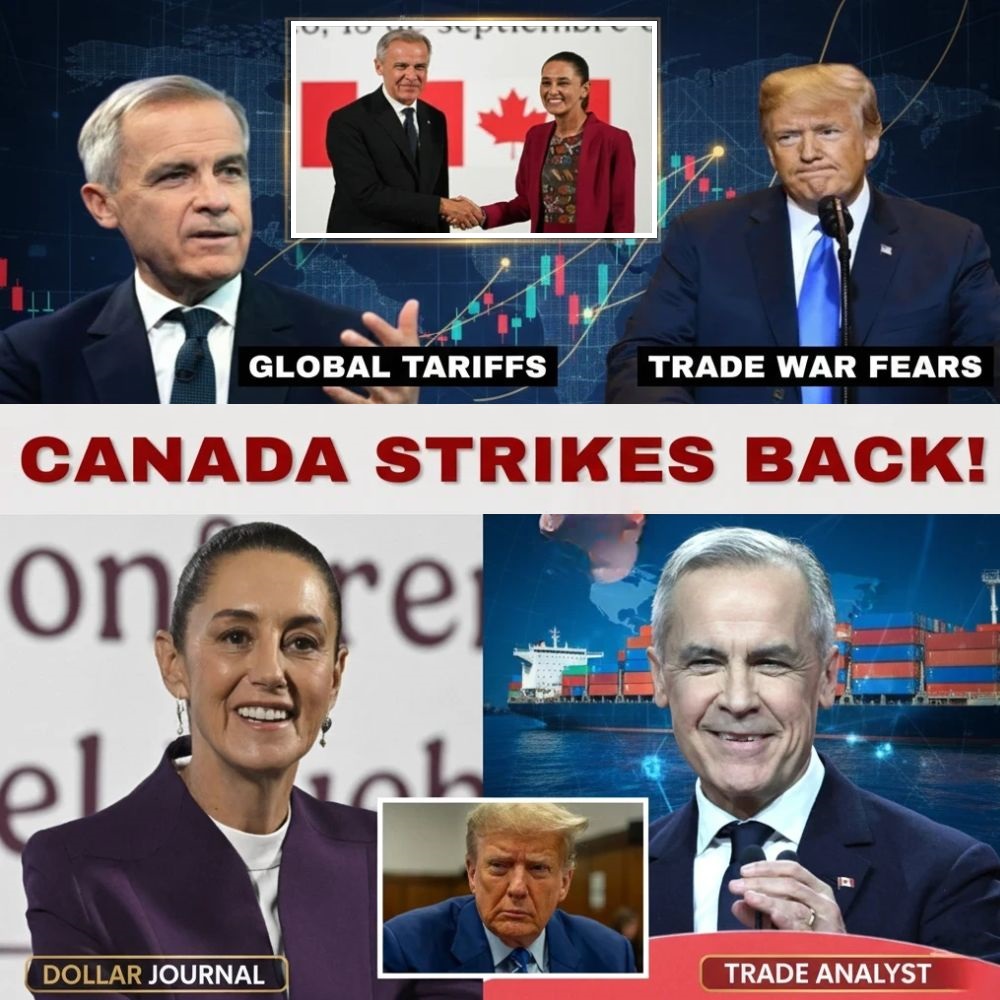
In a bold move that could reshape North American trade dynamics, Canadian Prime Minister Mark Carney has solidified a strategic alliance with Mexico, signaling a united front against the looming pressures of U.S. protectionism. Following a whirlwind 36-hour diplomatic visit to Mexico City, Carney’s discussions with Mexican President Claudia Sheinbaum have set the stage for a deeper economic partnership aimed at counteracting the detrimental effects of U.S. tariffs that have rattled both nations.
The urgency of this alliance cannot be overstated. With Canada facing a staggering 50% tariff on steel and 25% on vehicles, while Mexico grapples with a 25% tariff on pharmaceuticals and other products, both countries are under siege from U.S. trade policies that threaten jobs and economic stability. In response, Canada has initiated public consultations to prepare for the upcoming review of the Canada-United States-Mexico Agreement (CUSMA), emphasizing the need to alleviate the burdens imposed by these tariffs.
This alliance is not merely a diplomatic gesture; it represents a strategic recalibration in how Canada and Mexico engage with one another and the U.S. Historically, Canada has prioritized its relationship with its southern neighbor, often sidelining Mexico. However, Carney’s visit marks a pivotal shift towards a more integrated approach that recognizes the interdependence of the two nations in the face of external challenges.
The partnership seeks to enhance trade, coordinate security, and bolster economic resilience. As Carney noted, “We compliment the United States. We make them stronger, and we are all stronger together.” This sentiment underscores a delicate balancing act—both countries are keen to maintain a cooperative relationship with the U.S. while simultaneously fortifying their own economic positions.
The implications of this alliance extend beyond trade tariffs. By deepening ties, Canada and Mexico aim to diversify their markets, enhance opportunities, and mitigate vulnerabilities that have arisen from U.S. unpredictability. The projected $56 billion trade between the two nations in 2024 serves as a testament to the potential benefits of this collaboration.
Moreover, the discussions encompassed broader issues such as energy security, organized crime, and economic stability, highlighting the intertwined nature of these challenges. By aligning their strategies, both countries can amplify their negotiating power while ensuring the safety and prosperity of their citizens.
As the 2026 CUSMA review approaches, the necessity of this partnership becomes increasingly apparent. Coordinating efforts now will allow Canada and Mexico to present a united front, enhancing their bargaining positions in future negotiations. This proactive approach to diplomacy reflects a modern leadership style that prioritizes foresight and resilience.
The stakes are high, and the consequences of failure could be dire. For citizens, a robust trade alliance translates into job security and stable markets. For businesses, it promises predictable trade conditions and new growth opportunities. For investors, it signals a nation capable of navigating uncertainty with strategic intelligence.
In a world where unpredictability reigns, Canada and Mexico are charting a course towards a resilient and prosperous future. This mission, forged in the crucible of necessity, is more than just a diplomatic visit; it is a blueprint for survival and growth in a challenging global landscape. As these two nations move forward together, they exemplify the power of collaboration and strategic planning in transforming challenges into opportunities. The future belongs to those who act decisively, and Canada and Mexico are leading the way.