

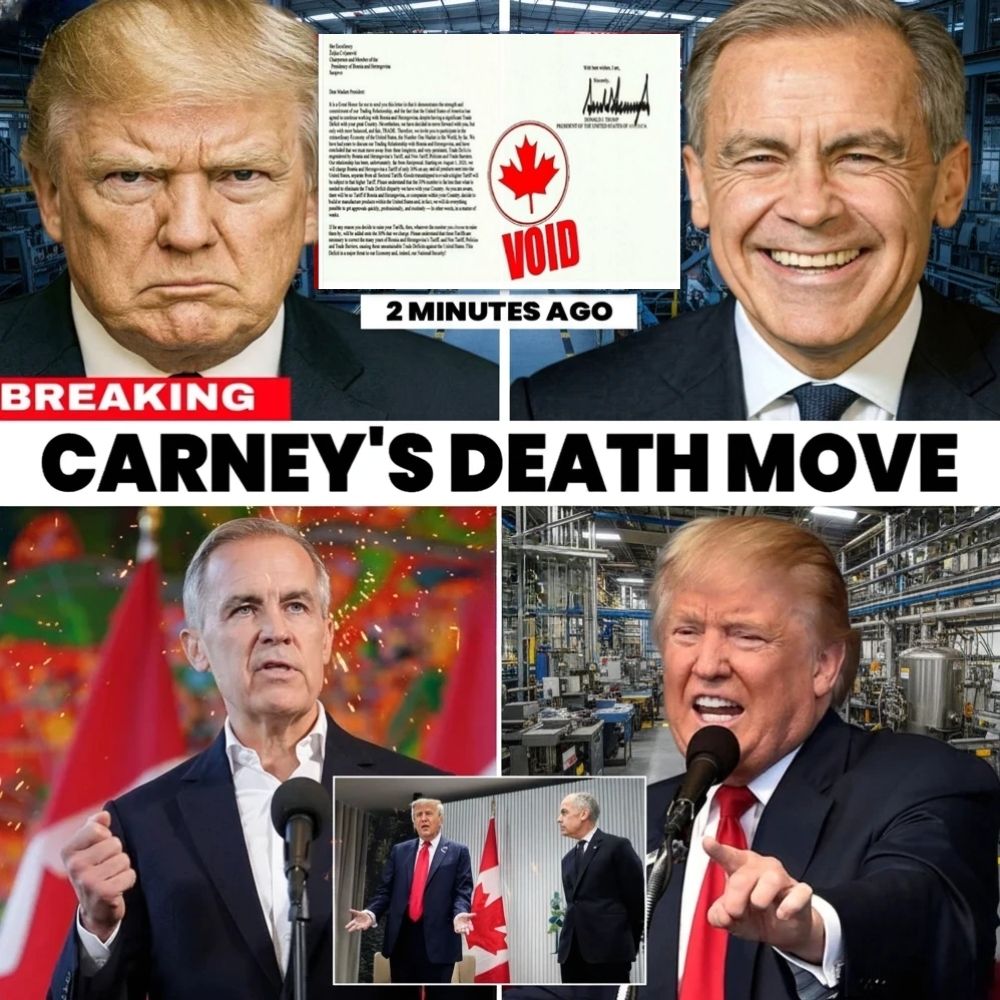
Canada’s strategic maneuvering in the face of escalating U.S. tariffs is reshaping the global trade landscape in unprecedented ways. As President Trump signed an executive order raising tariffs on Canadian goods from 25% to 35%, Canada quietly secured a $12 billion trade deal with Asian markets, marking a pivotal moment in international commerce. This shift illustrates not just a response to aggressive U.S. trade policies, but a calculated repositioning that could redefine economic relationships for years to come.
The immediate fallout from Trump’s tariff increases is stark. American consumers are already feeling the pinch, with grocery prices rising due to the tariff-driven costs on imports. Walmart’s admission that prices are escalating not solely due to inflation but directly from tariffs underscores the tangible impact on everyday Americans. Families are facing higher costs for essentials, from tomatoes to household goods, as American farmers struggle to sell their produce, leading to millions of pounds of tomatoes rotting in storage.
In stark contrast, Canadian agriculture is thriving. Canadian greenhouses are ramping up production, efficiently supplying international markets that once relied heavily on American farms. The transformation of Canadian agriculture into a high-tech powerhouse stands in sharp relief to the struggles of U.S. farmers like Florida’s Chad Smith, who lament the inability to cover costs due to plummeting prices.
Beyond agriculture, the ripple effects of Trump’s trade policies are being felt across various sectors. Coca-Cola’s contemplation of shifting from aluminum cans to plastic bottles due to soaring costs illustrates the broader crisis facing American manufacturers. With nearly half of the U.S.’s aluminum sourced from Canada, Trump’s tariffs have inadvertently entrenched Canadian dominance in this sector, leaving American companies with few options but to continue buying at inflated prices.
At the center of this strategic shift is Mark Carney, a figure whose influence is quietly steering Canada toward a more prominent role on the global stage. Carney’s experience leading two G7 central banks and navigating financial crises has positioned him as a formidable strategist. While Trump’s approach has been characterized by volatility and unpredictability, Carney’s tactics emphasize stability and reliability, appealing to international markets seeking dependable partners.
In the wake of Trump’s tariffs, Canada has capitalized on the erosion of trust in U.S. trade policy. The country has signed over $47 billion in new trade agreements within just 90 days, including significant contracts with Japan for energy and South Korea for nickel used in electric vehicle batteries. These deals reflect a strategic pivot, as allies once dependent on American markets now look northward for stability.
The implications of this shift extend beyond mere trade figures. The U.S.’s reputation as a reliable partner in international commerce is in jeopardy. Each tariff imposed sends a clear message: America can no longer be trusted to honor agreements or provide a stable economic environment. As nations reassess their alliances, Canada is emerging as a dependable alternative, committed to honoring contracts and maintaining consistent trade relationships.
This evolving landscape is not just a response to tariffs; it represents a fundamental reordering of power in the global economy. For decades, the U.S. has been the anchor of international trade, but as trust erodes, other nations are learning to navigate without it. Japan’s recent $4 billion nickel contracts and the European Union’s swift trade agreements with Canada exemplify this shift.
As the world watches this transformation unfold, it becomes clear that the stakes are high. The U.S. is inadvertently teaching its allies how to thrive without its influence, with Canada poised to fill the vacuum left by American unpredictability. The ramifications of this trade war extend far beyond tomatoes and aluminum; they signal a new era in global economics where cooperation, not isolation, will define success.
In conclusion, as Canada deftly maneuvers through the fallout of U.S. tariffs, the message is clear: in the modern economy, stability and trust are paramount. With Mark Carney at the helm, Canada is not just surviving; it is thriving, redefining its role on the world stage while the U.S. grapples with the consequences of its own policies. The scoreboard is shifting, and the implications will resonate for years to come.