

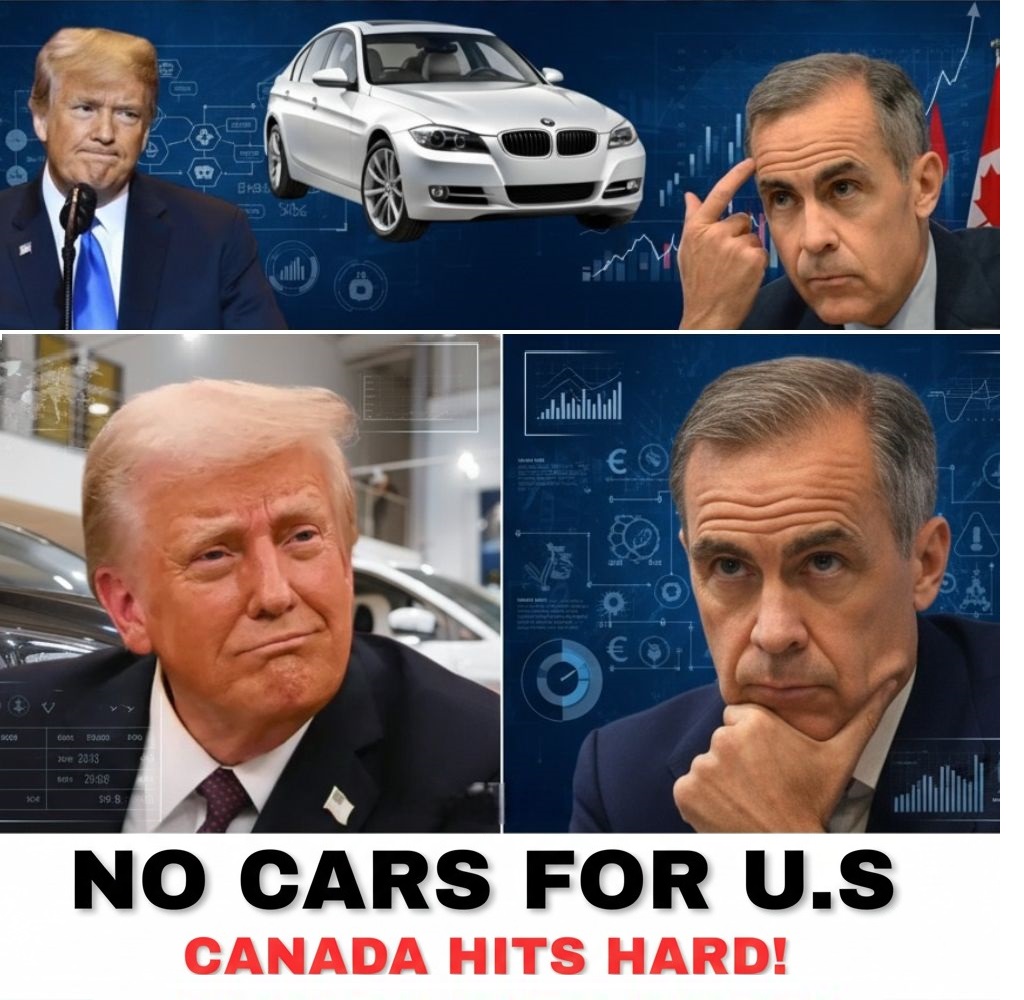
In a stunning escalation of North American trade tensions, President Donald Trump has announced a sweeping 25% tariff on all imported vehicles not produced in the United States, explicitly targeting Canada’s automotive sector—a move that has sent shockwaves across the industry and prompted an immediate, fierce response from Ottawa.
Trump’s declaration was blunt and unapologetic: “We don’t really want cars from Canada. We don’t need them to make our cars,” he asserted, aiming to safeguard American jobs by prioritizing domestic manufacturing. This bold stance threatened to unravel decades of deeply integrated cross-border supply chains that underpin the North American auto industry.
The repercussions in Canada were swift and severe. Ontario’s factories, the backbone of Canadian vehicle production, faced sudden disruptions. Shipments stalled, and a key Windsor plant halted operations temporarily, impacting over 3,500 workers and rattling communities dependent on the industry.
But rather than capitulate, Canada’s response was both immediate and calculated. Prime Minister Mark Carney announced retaliatory tariffs mirroring the US’s 25% levy on American vehicles that fail to meet the KOSMA standards. His message resonated loudly: Canada will defend its economy, workforce, and manufacturing sector without hesitation.
This tit-for-tat trade warfare exposes a fundamental misunderstanding by the Trump administration of the intricate, interwoven nature of the North American automotive industry. Modern vehicle production is a highly complex ecosystem where parts crisscross borders multiple times before final assembly. Disrupting this network risks punishing workers and suppliers far beyond Canada’s borders.
Trump’s aggressive tariffs, enforced unilaterally and without consultation, have been widely criticized for prioritizing showmanship and protectionism over strategic economic sense. The fallout is more than a mere marketplace disturbance—it threatens the livelihoods of hundreds of thousands reliant on this sector on both sides of the border.
Prime Minister Carney’s approach sharply contrasts with Trump’s recklessness. His measured, strategic countermeasures underscore Canadian resilience and leadership at a critical economic juncture. While factories faced unsettling pauses, Canadian officials worked rapidly to stabilize supply chains and protect jobs with précis and foresight.
The stakes could not be higher. Canada’s automotive sector directly and indirectly supports hundreds of thousands of families, suppliers, and workers. A protracted trade conflict risks devastating production lines and fracturing communities. Carney’s leadership has navigated these perilous waters, transforming potential disaster into a display of national strength and unity.
This confrontation reveals broader issues: America’s unilateral trade measures and disregard for established agreements destabilize not only Canada but also the entire North American vehicle production network, exposing fragility in the continent’s economic relations under Trump’s administration.
Carney’s tactical retaliation illustrates the power of strategic diplomacy over intimidation. In the face of economic aggression, Canada has not merely withstood the storm but asserted itself, shielding its automotive sector and signaling that threats will not undermine its economy or its people.
Factories may have temporarily halted and shipments delayed, but the automotive engine powering Canada’s economy keeps running. Workers, suppliers, and industry leaders witness a defining moment where resilience, intelligence, and strategic planning conquer brash threats and reckless policymaking.
The industry battle raging across the border is more than a tariff dispute—it is a test of leadership, vision, and the human toll of economic brinkmanship. While Trump’s tariffs aimed to destabilize, they instead exposed the limits of unilateralism and the necessity of cooperation in highly integrated industries.
Canada’s response sends a clarion message internationally: Intelligent, calculated leadership trumps aggressive posturing. The Canadian automotive sector stands firm, a testament to strategic resilience and economic foresight amidst a turbulent trade landscape.
As this high-stakes conflict unfolds, every factory, shipment, and negotiation in Canada writes the next chapter of a gripping saga. Carney’s leadership has transformed a potential crisis into a victory, underscoring the stark contrast between reckless power plays and thoughtful governance.
The 25% US tariff may be loud and disruptive, but Canada’s measured counterstrike ensures the automotive industry—an economic pillar—will survive and thrive. Aggression and intimidation may grab headlines, but in the long run, strategy and resilience dictate the outcome.
This is a story far beyond cars. It is about courage in adversity, the triumph of vision over brashness, and the unwavering strength of workers and communities. As the saga escalates, Canada’s steadfast response illustrates that reckless threats cannot break a nation united in purpose.
The battle between Trump’s tariffs and Canada’s strategy is far from over, but one fact stands clear: Canada’s automotive sector remains robust, fortified by leadership that understands the complex realities of modern trade and the human lives intertwined within it.
In the face of aggression, Canada has not only defended its ground but set a global example. The resilience displayed under Carney’s stewardship offers a powerful lesson that intelligent leadership and strategic resolve will outlast reckless confrontations and emerge stronger.
As factories adjust, shipments reroute, and workers persevere, the unfolding drama underscores the critical importance of cooperation in North America’s integrated auto industry. The stakes remain high, but Canada’s response proves that no tariff can crush its economy or its people’s spirit.
This breaking trade war between the US and Canada’s automotive sectors is a defining moment in international commerce. It demands attention as the world watches how strategic resilience battles aggressive protectionism in an uncertain economic climate.
Stay tuned as Canada’s strategic countermeasures continue to reshape the narrative, proving that while tariffs may disrupt, they cannot defeat an industry—and a nation—committed to thriving against all odds.