

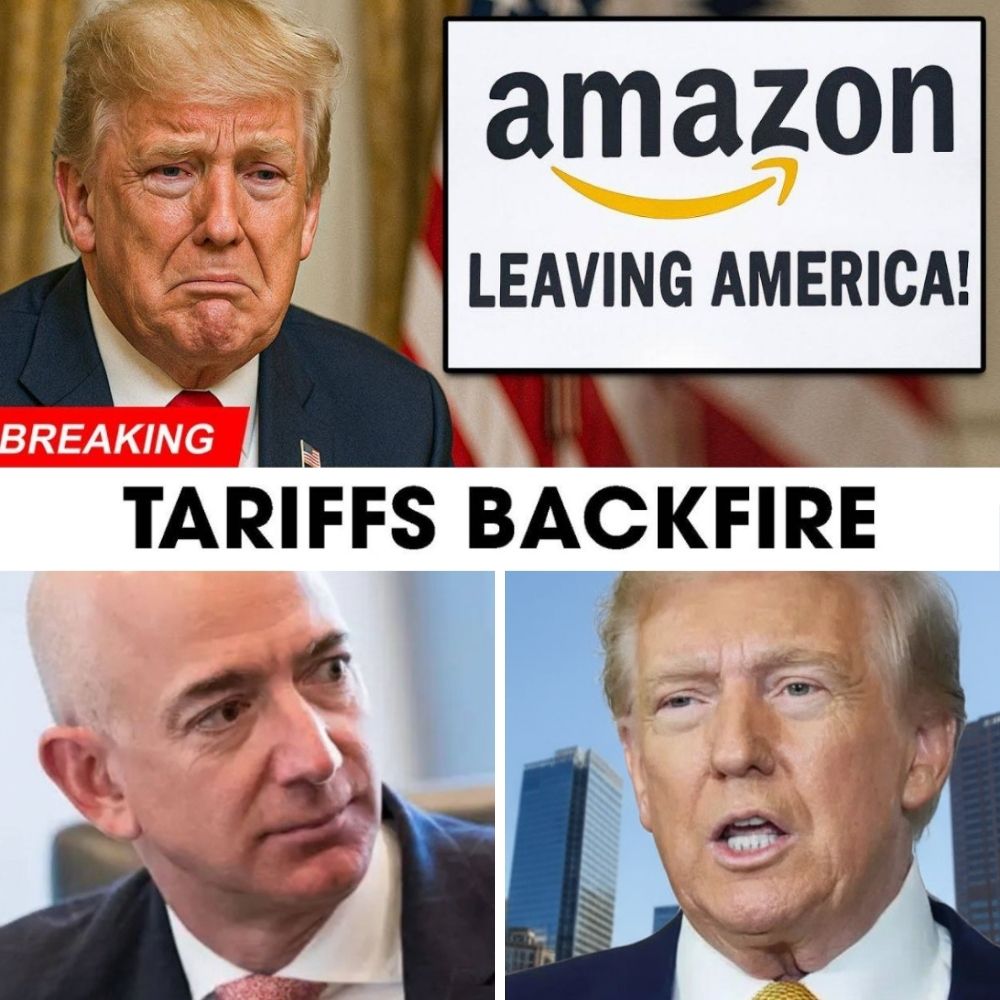
Amazon is making a seismic exit from significant parts of the U.S. market, driven directly by the crushing weight of President Trump’s unprecedented tariffs. The $13 billion supply chain reshuffle reveals a corporate giant scrambling to survive amid skyrocketing import costs that are upending American commerce and shaking the very foundation of global trade.
The fallout is swift and brutal. Amazon, which controls nearly 40% of U.S. e-commerce, is abandoning longstanding supplier relationships and rerouting operations to foreign hubs in Mexico, Vietnam, and India. This drastic pivot comes months after Washington imposed draconian tariffs—up to 145% on Chinese goods—that have rendered traditional import channels untenable.
Two months into this trade upheaval, Amazon announced a sweeping overhaul involving the cancellation and renegotiation of billions in supply contracts. The move is not merely a tactical business adjustment but a profound strategic transformation, forcing the e-commerce behemoth to balkanize its logistics network to avoid punitive duties that have driven costs—and retail prices—into the stratosphere.
President Trump responded with fury. A rare phone call with Amazon’s Jeff Bezos underscored the White House’s frustration, accusing the company of politicizing tariffs and sidelining American workers in favor of foreign partnerships. Yet, the cold reality is that Amazon’s shift stems from economic survival, not political gamesmanship.
This tariff-driven corporate exodus exposes a glaring flaw in Trump’s protectionist strategy: instead of fostering American manufacturing and jobs, it’s driving one of the nation’s most influential companies straight out of its home market. Industry analysts warn that this trend is only intensifying, with projections showing other retail giants like eBay and Alibaba scaling back U.S. supply chains by up to 30% over the next year.
The $13 billion overhaul barely scratches the surface. By mid-2026, Amazon is expected to adjust another $10 billion in contracts, further reducing its U.S. footprint. Meanwhile, the ripple effects are devastating America’s port cities. Los Angeles and Long Beach, once bustling gateways for Asian imports, are witnessing container traffic plunges of more than 20%, resulting in thousands of lost jobs for dock workers, truck drivers, and warehouse staff.
The economic toll is spilling directly onto American consumers. Everyday essentials—from smartphones to clothing—are seeing price surges between 10% and 25%, squeezed by tariffs and supply chain disruptions. Retail giants Walmart, Target, and Home Depot all report the strain, warning that costs are rising, product selections narrowing, and affordability for millions vanishing.
This is not a temporary setback. The tariff policies, instituted in early 2025, have fractured the global supply map. Asian manufacturing powerhouses, bolstered by strategic trade alliances and cheap labor, are rapidly seizing market share from the U.S. Mexico’s northern states are booming with new Amazon warehouses and logistics centers, while Vietnam and India attract billions in investment, becoming new epicenters of global commerce.
As American ports falter, these emerging markets are thriving. Mexico’s logistics infrastructure alone is projected to grow by 35% this year, riding Amazon’s migration wave. India and Vietnam are scaling up exports and manufacturing capacities, increasingly locking in Amazon’s long-term supply chain commitments outside U.S. borders.
The consequences extend far beyond balance sheets. Port-dependent communities face increasing economic hardship. Thousands of American families reliant on trade industry jobs confront layoffs, reduced hours, and bleak employment prospects. Local governments suffer from declining tax revenues, threatening public services and infrastructure in once-vibrant hubs of commerce.
Economic forecasts paint an alarming picture. Studies warn that U.S. imports may drop by 15% within months, dragging the country down by up to 1% of GDP next year. Consumer spending could fall sharply, threatening half a million retail jobs and deepening income inequality as prices escalate faster than wages.
The geopolitical ramifications are equally consequential. As Mexico, India, and Vietnam strengthen ties with the European Union and ASEAN, the United States risks marginalization in global trade alliances. Experts caution that the tariff approach meant to bolster American economic power may instead hasten its decline on the world stage.
Amazon’s pivot serves as a stark warning that multinational corporations wield formidable agility to bypass protectionist policies. For consumers, workers, and the U.S. economy alike, this $13 billion supply chain shakeup signals more than a business adjustment—it inspires urgent questions about the future of American competitiveness, labor markets, and global influence.
With tariffs showing no sign of easing, this tectonic shift in supply chains is poised to become permanent. By mid-2026, Mexico could eclipse key U.S. ports as Amazon’s primary logistics hub, accelerating job losses on American soil. Simultaneously, emerging economies are poised to dominate sectors once controlled by U.S. industry.
Amazon’s retreat from the American market marks a grim turning point. What started as a tariff policy to protect and strengthen domestic manufacturing has morphed into a catalyst for corporate flight, rising costs, job losses, and a shrinking role for the United States in global commerce. The country faces a stark choice: recalibrate or risk further irrelevance in the world’s trading order.