

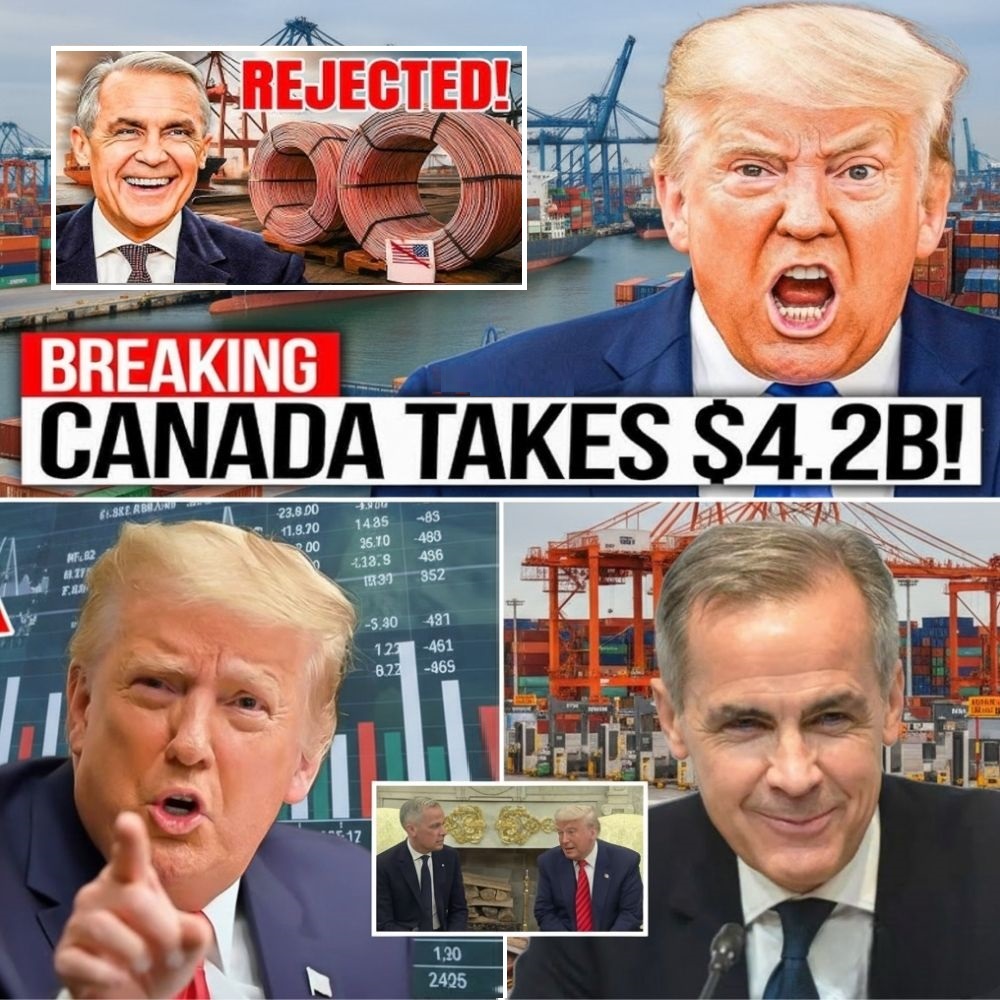
In a stunning escalation of trade tensions, U.S. President Donald Trump has announced a sweeping 50% tariff on copper imports from Canada, effective August 1st. This bold move, aimed at bolstering American industry, has sent shockwaves through the global market, resulting in an unprecedented $4.2 billion loss for the U.S. economy almost overnight. As the tariff takes effect, the implications extend far beyond mere numbers, threatening to reshape the industrial landscape and consumer costs across the nation.
The immediate reaction was dramatic: copper prices surged to record highs, reaching $5.95 per pound on the Chicago Mercantile Exchange. This spike reflects the vital role copper plays in various sectors, from electronics to construction, and underscores the precarious position of American manufacturers reliant on this essential metal. With the U.S. producing only about half of its refined copper needs, the tariff’s impact is poised to reverberate through supply chains, leading to increased costs for consumers and businesses alike.
In a swift and calculated response, Canada, which supplies nearly half of America’s refined copper, has frozen contracts and redirected shipments to Asia and Europe. This strategic pivot marks a significant shift in trade dynamics, as Canada seeks to reduce its dependence on the U.S. market. Mining companies are already adjusting their export routes, a move that could permanently alter the flow of copper and diminish U.S. access to this critical resource.
The ramifications of this tariff extend to multiple industries. Automakers, for instance, are bracing for skyrocketing production costs, with estimates suggesting that the price of producing each electric vehicle could rise by approximately $90 due to increased copper prices. This cost escalation threatens to stall projects and disrupt supply chains, as manufacturers grapple with shrinking profit margins and delayed timelines.
Moreover, the construction sector faces its own challenges, as higher copper prices translate into increased expenses for wiring and insulation. Homebuilding costs are projected to rise significantly, with estimates suggesting an increase of $17,000 to $22,000 per project. This inflationary pressure will inevitably be passed on to consumers, impacting housing affordability and overall economic stability.
The broader economic implications are equally concerning. Analysts predict that the U.S. GDP could shrink by half a percentage point in the upcoming quarter as major industrial sectors grapple with the fallout from the tariff. The $4.2 billion loss mirrors the volume of copper trade frozen due to Canada’s countermeasures, highlighting the deep interconnectedness of the U.S. economy with global supply chains.
This situation is reminiscent of the protectionist policies of the 1930s, which contributed to economic stagnation and isolation. The current tariff strategy, rather than fostering self-reliance, has exposed vulnerabilities within the U.S. copper industry, particularly in refining capacity. With domestic production unable to meet demand, the reliance on imports has only intensified, leaving American businesses vulnerable to price fluctuations and supply disruptions.
As Canada invests $1.8 billion to strengthen its export capacity and forge new markets, it signals a shift in the balance of power in the global copper trade. The U.S. risks being sidelined as Canada positions itself as a strategic competitor rather than a subordinate supplier. This transformation could have lasting consequences, as the U.S. finds itself increasingly dependent on global markets it cannot control.
In conclusion, the introduction of a 50% tariff on copper imports has not only created immediate economic turmoil but has also set the stage for a profound realignment of trade relationships. The fallout from this decision will be felt across various sectors, impacting everything from consumer goods to energy costs. As the U.S. grapples with the implications of its protectionist policies, the question remains: has this move fortified American industry, or has it opened the door to a new era of economic vulnerability? The world is watching closely, and the outcome of this unfolding crisis could redefine the future of U.S. trade and industry.