

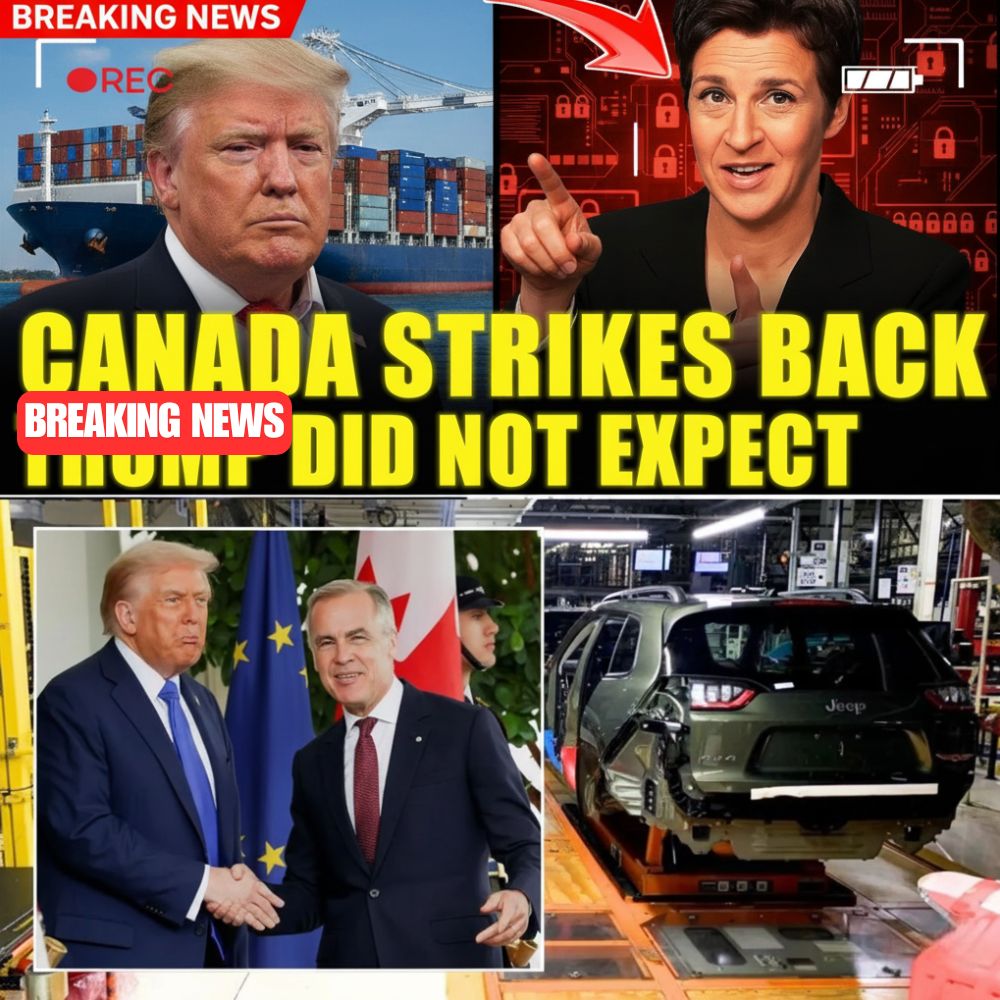
A profound and dangerous rupture in North American trade relations is now underway, with Canada taking unprecedented retaliatory measures against American automakers and triggering a confrontation that threatens the foundation of $900 billion in annual commerce.
Ottawa has slashed preferential import quotas for vehicles from Stellantis and General Motors, a direct financial penalty following the companies’ decision to shift production away from Canadian plants. The move, framed in Canada as industrial self-defense, marks a severe escalation from a localized dispute to a systemic crisis.
Washington responded with a sudden cancellation of all trade negotiations. Both governments are now preparing new tariff measures, risking the economic order built since NAFTA. The conflict has moved beyond boardrooms, igniting a surge of economic nationalism in Canada not seen in decades.
The consequences are already rippling into the U.S. economy. Canadian consumer boycotts are inflicting tangible damage. Travel to the United States has plummeted, with vehicle crossings down over 30% and air travel falling at double-digit rates, stripping billions from the U.S. tourism sector.
The boycott extends to goods. Shelf space for American spirits in Canada has collapsed, with sales down over 66% nationwide. Polls show nearly two-thirds of Canadian consumers intentionally avoiding U.S. products, a hardening of sentiment economists warn may permanently reroute trade flows.
This economic standoff has been supercharged by a political thunderbolt. An Ontario-government-funded advertisement in the U.S., featuring Ronald Reagan’s words against tariffs, was interpreted in Washington as foreign interference in domestic politics. The Reagan Foundation condemned it, and the Trump administration saw a challenge to its authority.
The advertisement transformed the dispute, injecting ideology and national pride into the conflict and evaporating space for compromise. It prompted fierce warnings from U.S. advisers that it could undermine legal arguments for presidential tariff powers.
Beneath the public drama lies a fragile, interdependent economic relationship. Auto manufacturing, where a single vehicle may cross the border six times, faces chaotic disruption. Steel, aluminum, and agriculture supply chains are equally vulnerable, threatening jobs and raising costs on both sides.
The geopolitical fallout is intensifying. Global rivals are seizing the opening. China sees an opportunity to offer Canada alternative markets for critical minerals and energy, potentially gaining a strategic foothold in the Western Hemisphere at U.S. expense.
The European Union is accelerating outreach to Ottawa on green technology and electric vehicle supply chains, offering predictability contrasted with U.S. volatility. American allies worldwide now question if they could be the next target of sudden tariff escalation.
A dangerous perception is crystallizing in global capitals: if the U.S. will wage a trade war against its most integrated ally, no partnership is safe. This erodes the foundational trust upon which decades of U.S.-led economic cooperation was built.
The most consequential shift, however, is being prepared in Ottawa. Sources confirm Canadian ministers are evaluating a structural countermeasure far beyond tariffs or boycotts: the formation of an integrated trade corridor linking Canada directly with Europe and the Indo-Pacific.
This proposed network would include shared regulations, guaranteed market access for critical minerals, and cooperative infrastructure financing. Its goal is to reduce Canada’s vulnerability to U.S. economic pressure by building a parallel economic pillar outside North America.
If executed, this pivot would be seismic. For the first time in modern history, Canada could negotiate major commercial agreements without assuming the U.S. market as its default destination. Washington would face a North American ally operating economically outside its gravitational pull.
Analysts warn this would embolden U.S. competitors, reroute strategic supply chains, and permanently erode American economic influence. The trade war would cease to be a dispute over auto parts and become a historic geopolitical realignment.
North America now stands at its most precarious crossroads in thirty years. The decisions made in the coming weeks will determine whether this confrontation is a brutal but temporary negotiation or the first stage of a fundamental unraveling of the continent’s integrated prosperity.