

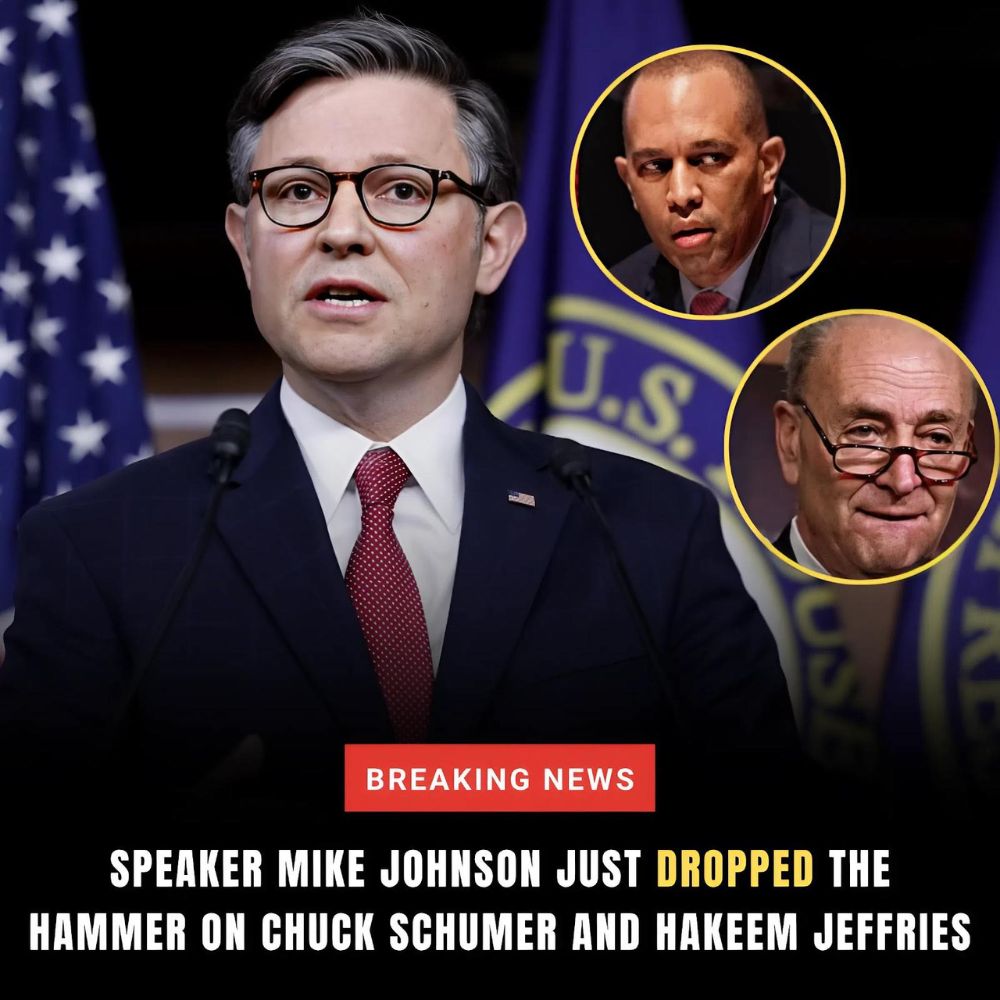
In a blistering rebuke that has electrified Capitol Hill, House Speaker Mike Johnson declared Senate Majority Leader Chuck Schumer and House Minority Leader Hakeem Jeffries “irredeemable,” vowing to sideline both in urgent negotiations to avert a deepening government shutdown. The Republican firebrand’s comments, delivered during a tense press conference on Thursday, signal a seismic shift in bipartisan talks, as Johnson pivots to wooing moderate Democrats directly—bypassing the party’s top brass in a bid to secure the seven Senate votes needed to break the impasse.
The shutdown, now in its 13th grueling day, has paralyzed federal operations, furloughing hundreds of thousands of workers and threatening disruptions to everything from Social Security payments to national park access. At its core lies a partisan chasm over spending priorities: Republicans demand deep cuts to discretionary funding and stricter border security measures, while Democrats insist on safeguarding social programs and averting what they call “extremist sabotage” of essential services. Johnson’s House passed a stopgap funding bill weeks ago, but it languishes in the Senate, where filibuster rules require 60 votes—a tall order in a narrowly divided chamber.
“I’ve given up on the leadership! There’s no point in me sitting down with Chuck Schumer. He’s painted himself into a corner,” Johnson thundered, his voice laced with frustration born of marathon sessions that yielded little progress. He dismissed Schumer and Jeffries as captives to their party’s progressive wing, name-dropping New York City mayoral hopeful Zohran Mamdani as a symbol of the “far-left” forces allegedly holding Democrats hostage. “I don’t think they’ll be able to tell Mamdani in New York and his disciples that they voted to open the government,” Johnson scoffed. “We’re trying to appeal to a handful of moderates or centrists who care more about the American people and will put the people’s interests over their own and do the right thing in the Senate.”
This brinkmanship marks a departure for Johnson, who ascended to the speakership amid GOP infighting just two years ago. Once a bridge-builder, he now channels the populist fervor that propelled Donald Trump’s 2024 return to the White House, framing the shutdown as a moral crusade against “irresponsible” Democratic intransigence. “It doesn’t matter what we do in the House. It doesn’t matter what we pass. We have to get a handful of moderates over there who care about America to do the right thing. We need at least seven Democrats,” he emphasized, eyeing swing-state senators like Joe Manchin’s successors in West Virginia and Kyrsten Sinema’s Arizona allies as potential flippers.
Democratic leaders fired back swiftly, accusing Johnson of grandstanding to appease his party’s hardliners. Schumer, in a floor speech laced with sarcasm, called the remarks “a desperate Hail Mary from a speaker who’s lost control of his own caucus.” Jeffries, speaking to reporters outside the Capitol, decried the rhetoric as “dangerous divisiveness” that endangers vulnerable Americans. “While families skip meals and federal workers go unpaid, Johnson plays to the MAGA gallery instead of leading,” Jeffries said. Behind the scenes, however, whispers suggest quiet outreach: Senate Majority Whip Dick Durbin confirmed “rank-and-file conversations” with GOP counterparts, hinting at backchannel efforts to cobble together a compromise.
Analysts see Johnson’s gambit as a high-wire act. On one hand, it could pressure fence-sitting Democrats, many facing reelection in red-leaning districts, to prioritize constituents over party loyalty—echoing the 2018 midterms when shutdown fatigue flipped seats. On the other, it risks alienating potential allies and prolonging the crisis, with economic forecasters warning of a $1.5 billion daily hit to GDP. As Halloween bells toll across the nation, the real fright on Pennsylvania Avenue is the specter of a holiday-season shutdown, testing whether Johnson’s end-run around leadership can summon the bipartisanship Washington so desperately needs.
The clock ticks louder with each passing hour. Will seven Democrats heed the call of country over caucus? Or will Johnson’s hammer strike only sparks, leaving the government—and the American people—in the dark? Only the moderates’ votes will tell.