

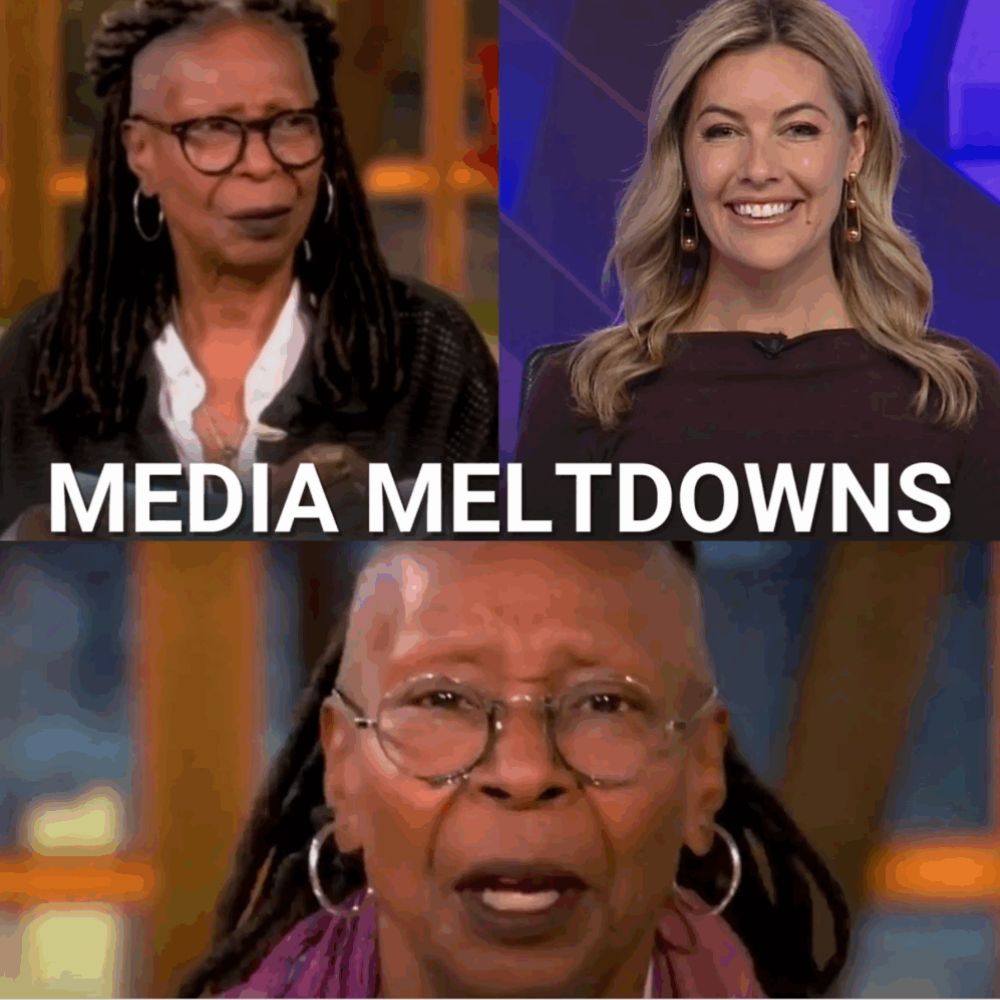
Media Meltdowns and the Accountability Crisis: When the Narrative Collides with Reality
WASHINGTON, D.C. – This week has delivered a fresh wave of public embarrassments for established media outlets and prominent liberal figures, shining a harsh spotlight on what critics are calling a severe case of “Trump Derangement Syndrome” and a desperate flight from accountability. From a stunning revelation about the BBC doctoring a former president’s speech to Whoopi Goldberg’s live on-air crash-out after being fact-checked, the established liberal narrative is facing an unprecedented credibility crisis.
The January 6th Deception: BBC Caught Editing Trump’s Speech
The most alarming media revelation comes from across the Atlantic, where the BBC, a publicly funded broadcaster, has been accused of blatant deception. A leaked 19-page internal dossier, obtained by The Telegraph, revealed that the BBC’s documentary, Trump: A Second Chance, misled viewers by selectively editing a critical portion of Donald Trump’s January 6th speech.
The documentary reportedly aired a spliced clip that made it appear as though the former President was immediately encouraging his supporters to riot. The edited version included the line, “We’re going to walk down to the capital and I’ll be there with you and we fight. We fight like hell. We’re going to walk down to the capital.”
Crucially, the documentary omitted the subsequent context where Trump told supporters, “And we’re going to cheer on our brave senators and congressmen and women.” This omission drastically altered the meaning, stripping the call to “fight” of its political context—presumably a figurative fight for contested election results—and making it appear to be an incitement to physical violence at the Capitol. Critics argue that this deliberate omission highlights a desperate attempt by “British taxpayers funding fake news” to uphold the narrative that the former President incited the riot.
Whoopi Goldberg Crashes Out: Nuance vs. Fact
On the American side, the week was equally disastrous for the co-hosts of The View. Whoopi Goldberg faced a live, on-air fact-check, resulting in a remarkable display of deflection and frustration.
The incident began when Goldberg falsely accused Donald Trump of using an autopen to issue a pardon, a claim typically leveled against President Joe Biden regarding his cognitive state. When co-host Sunny Hostin politely corrected her—stating, “We don’t know if Trump used an autopen to pardon”—Goldberg’s immediate response was incredulous: “Oh, come on.”
Instead of admitting the error, Goldberg retreated into a defense that was immediately mocked by observers. “The hardest thing about this job now is… no one understands nuance,” she lamented, claiming she was merely “making jokes” and “fooling around.”
The immediate assessment from media critics was scathing. The true “hardest part” of her job, they argued, should be “getting her facts correct or at least clarifying that she’s made a mistake.” The attempt to reclassify a factual error as a “joke” underscored a perceived inability among some media personalities to accept accountability for misinformation, especially when directed at their primary political antagonist.
The Crime Rate Dodge and Michelle Obama’s ‘Victim Card’
The week’s theme of evasion continued with two high-profile figures.
The 60 Minutes Interview
During a new interview with Norah O’Donnell on 60 Minutes, Donald Trump reminded the CBS host of the substantial sum CBS News was previously forced to pay him due to an alleged editing controversy involving a prior interview with Kamala Harris. The focus then shifted to crime in D.C., where Trump challenged O’Donnell directly, as a D.C. resident, to acknowledge the improvement in street safety under his administration.
O’Donnell’s response—”I think I’ve been working too hard. I haven’t been out and about… I get in my car and go to work and I go home”—was widely criticized as a pathetic dodge. As one commentator noted, for O’Donnell to claim she’s too busy to “at least acknowledge the crime stats that show that crime has absolutely plummeted in D.C.” speaks volumes about the media’s willingness to ignore positive data if it contradicts a desired political narrative.
The Grace Defense
Meanwhile, former First Lady Michelle Obama reignited familiar grievances by suggesting that she and her family “didn’t get the grace that I think some other families have gotten” due to being the first Black couple in the White House.
Critics immediately dismissed this as another playing of the “victim card,” pointing to the stark contrast in media treatment between the Obama family and the Trump family. They argued that the Obamas were treated “far better than other families,” citing the widespread negative media coverage, boycotts by major fashion magazines against Melania Trump, and the unchecked cruelty directed at Trump’s children, including a journalist musing about the death of the former President and speculation about Barron Trump’s mental disability. “This entire like, oh, we felt as if we were mistreated,” one critic scoffed. “I’m sure Barron Trump felt mistreated.”
Pelosi’s Hyperbole and Fetterman’s Rebuke
The political hyperbole meter went off the charts when former House Speaker Nancy Pelosi (D-CA) went on CNN to launch a furious, unhinged attack on Donald Trump, calling him “just a vile creature” and “the worst thing on the face of the earth.” She followed this up with the fantastical claim that Trump has “abolished the House of Representatives” and turned the Supreme Court into a “rogue court.”
Even CNN hosts appeared to push back, but the most significant rebuke came from a surprising corner: her own party. Democrat Senator John Fetterman (D-PA) slammed Pelosi’s comments, stating, “I would say that’s part of the worst creatures on the face of the earth are Hamas or like the leadership of Iran… I wouldn’t describe our president [that way]… I don’t think that’s really entirely appropriate.”
Fetterman’s rare display of political sobriety was hailed as a welcome break from the partisan vitriol, with critics suggesting he is sounding “more and more like a Republican.”
Common Sense and the Immigration Debate
The stark divide between Washington’s narrative and everyday reality was perfectly illustrated by a common-sense voter on Fox News discussing immigration. The voter articulated a foundational American value that often gets lost in the political noise: the necessity of respecting the law.
“The difference between being kind… is being nice to people from different lands, but they also have to be respectful of our laws,” the voter stated, pointing out that no one offered his family, who have been in the U.S. since the 1700s, “a free $1,400 debit card” or a “free apartment.”
This common-sense perspective—that respect for the rule of law is mandatory for all, citizen or immigrant—is being championed by those who support policies like those promised by Donald Trump, including mass deportations. The central argument remains: there cannot be two tiers of justice—one for citizens who face jail for breaking the law, and another for illegal immigrants who infiltrate the country with “complete disrespect” for its sovereignty.
Hollywood’s Admission of Irrelevance
Finally, even in Hollywood, the realization is setting in that celebrity influence is non-existent. Actress Jennifer Lawrence, who was politically vocal during the first Trump administration, made a surprising and frank admission: “Celebrities do not make a difference whatsoever on who people vote for.”
Her conclusion—that sharing her opinion merely adds “fuel to a fire that’s ripping the country apart“—was seen as a long-overdue epiphany. Critics expressed hope that more liberal elites might follow suit, realizing that their “cosmopolitan, posh lifestyle” has completely disconnected them from “real Americans” who vote based on issues like jobs, crime, and security.
The cumulative effect of these media meltdowns and missteps demonstrates a profound disconnect between the liberal narrative ecosystem and the reality faced by most Americans. When facts and accountability threaten the political agenda, the response is increasingly one of deflection, hyperbole, and retreat into identity politics. The American people, however, appear to be tuning out the noise and demanding truth.