

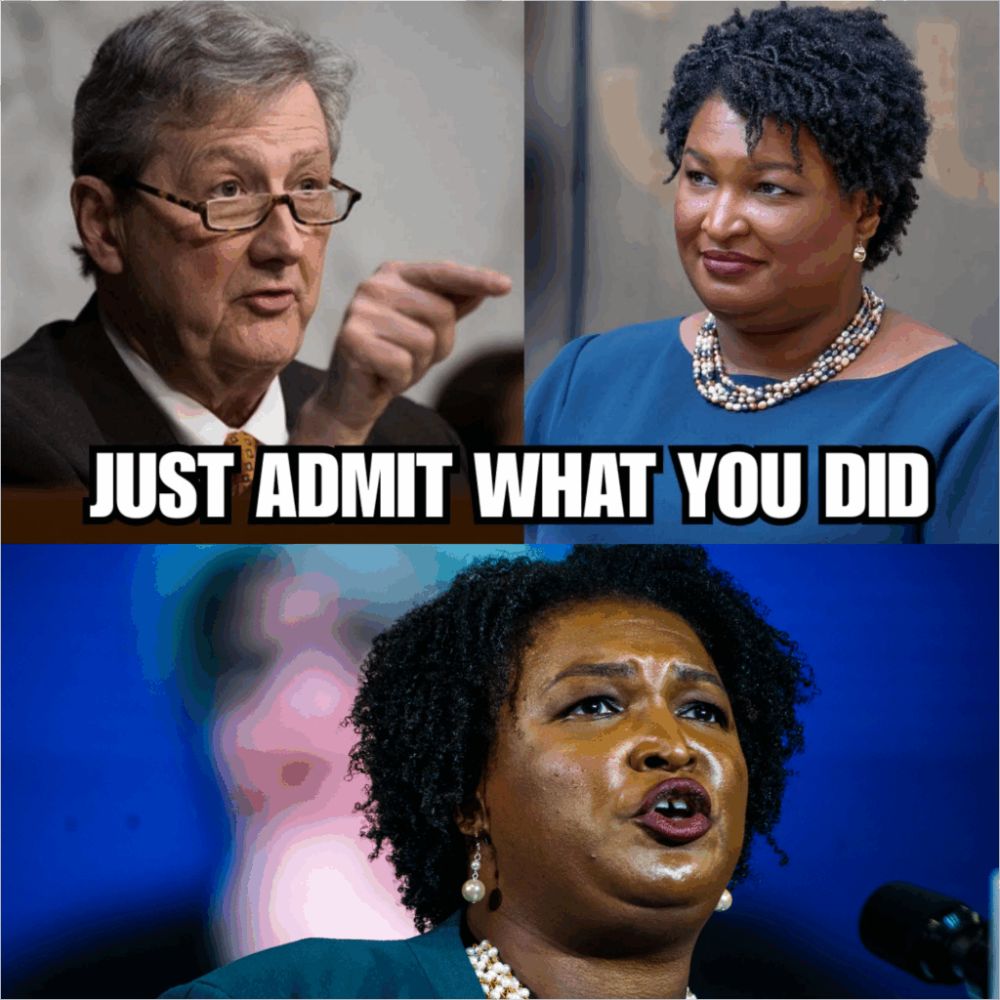
Congress ERUPTS In Laughter As Senator Kennedy DESTROY Stacy Abrams For Lying
Senate Judiciary Committee Showdown: Kennedy Interrogates Abrams on Georgia Election Law and Voter Integrity
WASHINGTON, D.C. – A Senate Judiciary Committee hearing recently became the stage for a tense exchange between Senator John Kennedy (R-LA) and voting rights advocate Stacey Abrams. The confrontation centered on the controversial Georgia election law and Ms. Abrams’s repeated descriptions of certain provisions as “racist” or driven by “racial animus.”
The exchange, characterized by Senator Kennedy’s demand for specific policy details over what he termed “platitudes,” highlighted deep divisions over the balance between ballot access, election integrity, and accusations of racial motivation in legislative reform.
The Core Debate: Accessibility vs. Security
Senator Kennedy initiated the discussion by questioning Ms. Abrams on fundamental issues of election timing, voter confidence, and specific components of the Georgia bill she opposed.
1. Election Timing and Confidence
The Senator began by asking Ms. Abrams directly whether she believed the country was “better off having an election day or an election month,” implying a concern over delayed final results and undermined confidence.
Ms. Abrams did not directly choose between “day” or “month.” Instead, she pivoted, arguing for maximum accessibility:
“I think we are better off having a process that allows every single American the opportunity to participate in elections. And given that the initial notion of an election day was based on an agrarian economy that no longer exists for millions of Americans… we have to make every opportunity to make voting accessible to every American.”
When pressed by Senator Kennedy as to whether she was “okay with us not knowing say weeks or months after an election who the winner is,” Ms. Abrams responded simply, “Yes,” noting historical precedents for delayed results.
2. Specific Objections to the Georgia Bill
Senator Kennedy then demanded Ms. Abrams provide a specific list of the provisions within the Georgia bill she found objectionable, stating he was “not interested in platitudes.”
Ms. Abrams listed several key measures:
Federal Runoff Period: It shortens the federal runoff period from nine weeks to four weeks.
Absentee Ballots: It restricts the time a voter can request and return an absentee ballot application.
Drop Boxes: It eliminates over 300 hours of dropbox availability.
Out-of-Precinct Voting: It bans “nearly all out-of-precinct votes.”
Early Voting Hours: It restricts the hours of operation, making it optional for counties to limit hours from 7 a.m. to 7 p.m. to as narrow as 9 a.m. to 5 p.m.
Voter ID for Mail Ballots: It requires that a voter have a photo identification or some other form of identification to participate in the absentee ballot process.
The Voter ID Contradiction
The exchange intensified when Senator Kennedy pressed Ms. Abrams on the principle of voter identification, independent of the Georgia law’s context.
Senator Kennedy asked: “If a state decides to require a voter to prove who the voter says he is or she is, do you consider that racist?”
Ms. Abrams responded in the negative, asserting her support for the concept:
“Not at all, sir. Voter identification has been a part of the American theory of democracy almost from the beginning. I support voter identification. Yes.”
This statement led to immediate scrutiny, as Ms. Abrams had previously labeled the Georgia bill—which introduces ID requirements for mail-in voting—as having “racist” provisions.
3. Debate on Ballot Harvesting
Senator Kennedy next introduced the concept of ballot harvesting, defining it as a practice where political parties pay operatives to “go out and help people with their ballots and collect their ballots.”
He asked Ms. Abrams directly: “Are you okay with that or are you against that?”
Ms. Abrams declined to give a simple yes or no, arguing that the practice is often framed negatively despite its potential to improve access:
“I don’t think it’s an either/or situation. I think it depends on what the conditions are, what the rules are, but making it easier for those who want to participate in elections to do so… safely and securely.”
When pressed to condemn a scenario where operatives might “suggest who you might want to vote for” and then collect the ballot, Ms. Abrams conceded that she would object only “if it turns into buying votes.” She insisted that the “context, the rules, and the structure matters.”
4. Allegations of Racial Animus
Finally, Senator Kennedy addressed Ms. Abrams’s claim that the Georgia bill was “grounded in racial animus,” asking her how she could be certain of the motive.
Ms. Abrams justified her position by pointing to the timing of the legislative changes:
“Because for fifteen years, the Republican Party of Georgia not only sanctioned but celebrated its vote-by-mail provisions. It was only after voters of color for the first time in fifteen years successfully used those provisions in favor of the party that they disproportionately support that those rules changed.”
She similarly argued that early voting hours were cut only after communities of color utilized them successfully.
Conclusion
The hearing exposed the deep partisan divide over electoral integrity measures. Ms. Abrams defended her objections based on the outcome of the legislation—namely, its timing and impact following high turnout among minority voters. Senator Kennedy, conversely, pressed for specific policy justifications, pointing to the apparent contradiction between her support for the principle of Voter ID and her condemnation of the bill that enacts it.
The exchange concluded with Ms. Abrams’s insistence that the legislation, while perhaps hurting all voters, disproportionately targets and affects voters of color due to its calculated timing and structure.