

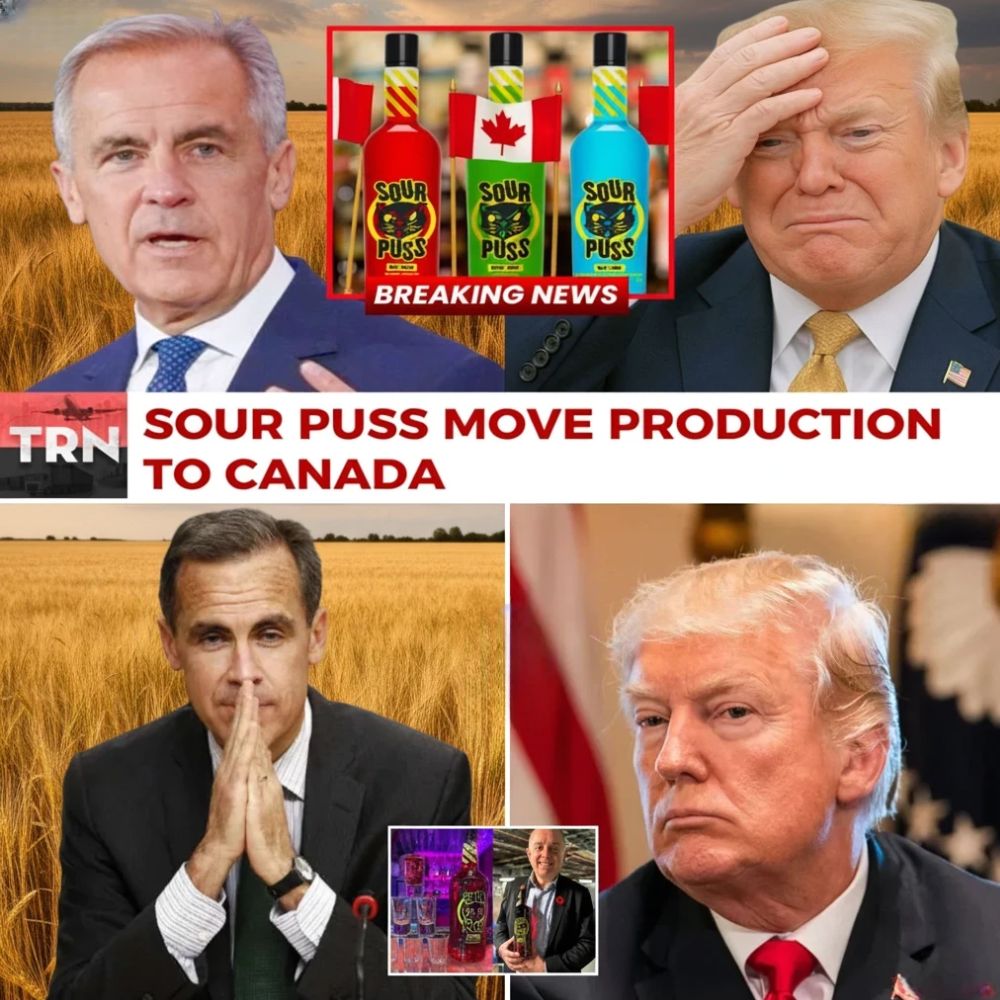
In a stunning turn of events, Phillips Distilling Company has shifted its production of Sour Puss from Minnesota to Montreal, marking a significant blow to American manufacturing amid escalating trade tensions. This move highlights the unintended consequences of President Trump’s tariffs, which were intended to bolster U.S. industry but have instead pushed companies to seek refuge in Canada.
CEO Andy England revealed that nearly 98% of Sour Puss sales come from Canada, making the brand a staple in Canadian nightlife. The decision to relocate production stems from a crisis triggered by U.S. tariffs on Canadian goods, which led Canadian provinces to retaliate by halting purchases of American-made liquor.
As shelves emptied of U.S. spirits, Phillips Distilling faced an existential threat. With Canada being its primary market, the company had to act swiftly to ensure survival. By moving operations to Montreal, Phillips not only preserved its business but also sent a clear message about the shifting dynamics in North American trade.
This development is emblematic of a broader trend where Canadian consumers and provincial liquor boards are asserting their purchasing power against U.S. tariffs. Canadians have demonstrated a willingness to support domestic products, effectively flipping the narrative of the trade war back on the U.S.
The implications of this shift extend beyond Sour Puss. As American companies grapple with the realities of the trade war, many may reconsider their operations in favor of more favorable conditions in Canada. This trend could signify a significant realignment in North American supply chains.
The political backdrop adds weight to this moment. With Trump’s administration escalating tariffs across various sectors, the unintended consequence has been a growing economic independence for Canada. Prime Minister Mark Carney is actively pursuing diversification in trade, seeking new partnerships beyond the U.S. and strengthening ties with Asia.As Canada invests in infrastructure and clean energy, the move of Sour Puss production symbolizes a shift in market gravity. The U.S. may find itself losing more than just a liquor brand; it risks ceding ground in vital manufacturing sectors as companies reassess their strategies.
The Sour Puss saga serves as a reminder that economic relationships are complex and can evolve rapidly in response to political pressures. As Canada asserts its market influence, the question remains: who will be the next American company to follow Phillips Distilling’s lead?This moment is not just about a single brand; it reflects a significant turning point in North American trade relations. The optics are uncomfortable for the Trump administration, as policies designed to strengthen U.S. industry have inadvertently driven production north of the border. As Canada prepares for future trade negotiations, the move of Sour Puss production could be a harbinger of larger shifts in the economic landscape. The resilience demonstrated by Canadian consumers and businesses may very well redefine the contours of trade in North America for years to come.
In the wake of this development, it remains to be seen how the U.S. will respond. Will it double down on tariffs, or will it reconsider its approach to trade with Canada? One thing is clear: the trade war has created a new reality, and Canada is poised to seize the opportunities that arise from it.