

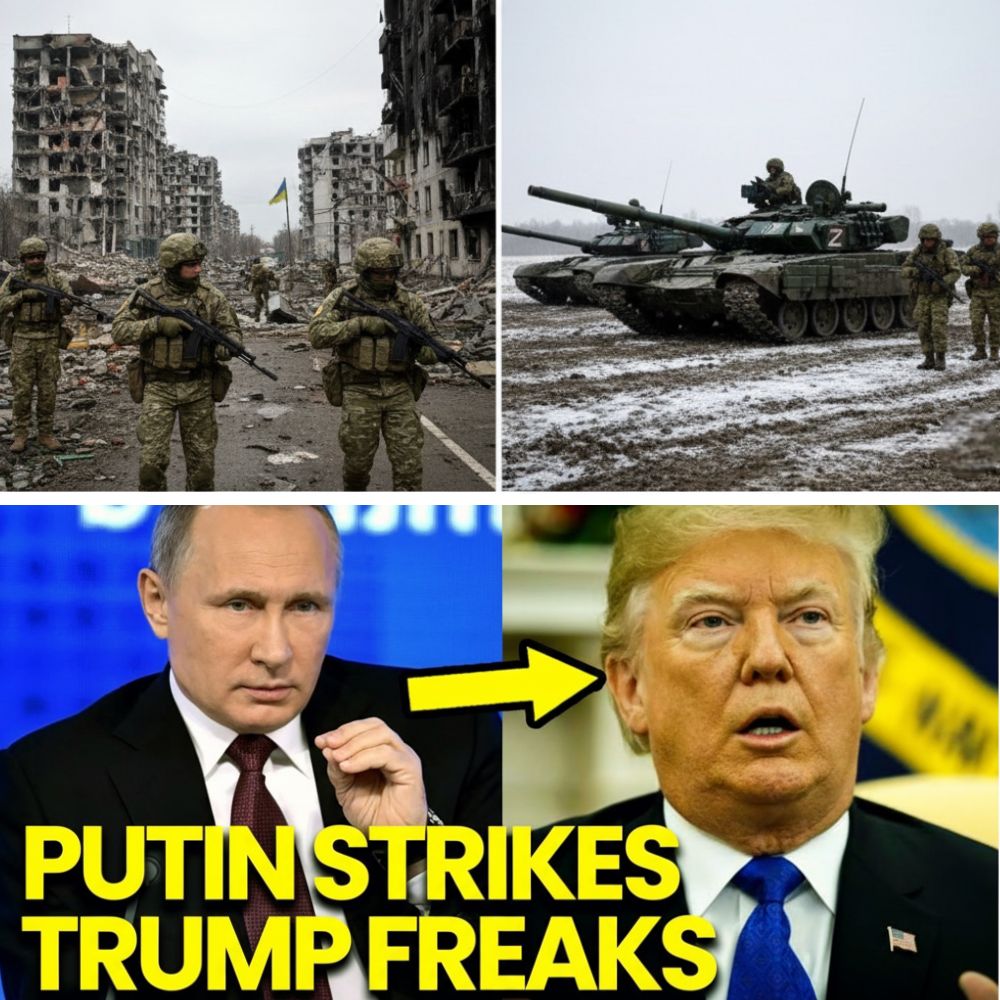
Trump HUMILIATED by Putin: Ukraine “Peace Deal” Collapses, Turning His Signature Promise into a Political Nightmare
On December 11, 2025, the Kremlin publicly rejected Donald Trump’s Ukraine peace plan, turning his promise to “end the war in 24 hours” into a spectacular embarrassment on the global stage. Just days earlier, Trump had shortened his “deadline” for Vladimir Putin – from 50 days down to just 10–12 days to end the war – and rolled out a “28-point framework” that his envoys took to Moscow. In response, Russia didn’t just say “no” – it issued maximalist demands that looked far more like terms of surrender than any reasonable peace agreement.
According to leaked details, Trump’s Ukraine peace plan rested on three pillars: hundreds of billions of dollars in postwar reconstruction for Ukraine, partially restarting Russian gas flows to Europe, and a set of security arrangements meant to reassure Kyiv. The White House hoped that by “throwing money on the table,” it could pull both sides into negotiations, ease global energy prices, and allow Trump to present himself to voters as a peacemaker – maybe even snag a Nobel Peace Prize nomination. On paper, it looked like a “win–win” deal in the classic real-estate style Trump likes to brag about.
But Moscow was playing a completely different game. Just hours after receiving the American proposal, Russia issued a public response demanding full recognition of all territories it has “annexed” – including Donbas, Crimea, and occupied areas in eastern and southern Ukraine – plus a 50-kilometer demilitarized buffer zone inside Ukrainian territory, along the current line of contact, and permanent guarantees that Ukraine will never join NATO. These are not bargaining positions; they are maximalist conditions closer to an ultimatum than a compromise.
Putin’s blunt rejection wasn’t just about turning down a peace plan – it was a direct hit on Trump’s carefully crafted image as a “master negotiator”. Instead of handing Trump an easy diplomatic victory to parade before the cameras, the Kremlin deliberately turned the 28-point framework into a punchline, signaling to the world who really holds the upper hand in the Ukraine conflict. To make things even more cynical, just days earlier some Russian officials had publicly praised Trump’s new national security strategy – soothing his ego while quietly torpedoing his peace initiative on the ground.
Trump’s reaction only highlighted how badly this stung. On Truth Social, he rushed to lash out at Putin, calling Russia a “paper tiger,” insisting Russian forces were “failing badly” around hotspots like Pokrovsk and claiming their economy was collapsing. The problem is the battlefield reality doesn’t match that narrative: Russia still controls around 20% of Ukrainian territory, continues to grind forward with heavy losses but no collapse, and has kept its economy afloat by skirting sanctions through China, India, and other partners. The tough talk sounds less like strategy and more like damage control for bruised pride.
Trump’s core mistake is that he treated a war like a real-estate negotiation. In his mind, if you stack enough “incentives” – reconstruction money, gas exports, sanctions relief – the other side will naturally want to close the deal. But for Putin, Ukraine is not just about economics; it’s about geopolitical ambition and domestic survival: expanding Russia’s sphere of influence, blocking NATO expansion, sending a message to its neighbors, and proving at home that defying the West pays off. In that framework, Putin believes time is on his side, while Trump is the one eager to pull the U.S. back – which means Trump has very little leverage to force real concessions.
The result is that Trump’s dealmaker brand has taken a serious hit. Democrats now have a ready-made attack line: Trump promised to “end the war in 24 hours,” yet nearly a year into his second term, the war drags on and Putin has publicly slapped down his peace initiative. Campaign ads practically write themselves: cut from Trump boasting about his special relationship with Putin and his negotiation skills, straight to the Kremlin’s cold rejection and maximalist demands. The message is simple and brutal: he talked big and delivered nothing.
The damage isn’t just to Trump’s image—it carries real economic and geopolitical risks. As the conflict drags on, global energy markets stay tight: if the war escalates, oil and gas prices could spike, pushing up inflation and hitting American consumers at the pump and in their power bills. Meanwhile, U.S. allies in Europe see a Washington under Trump that either can’t or won’t effectively constrain Moscow, while rivals like China and North Korea quietly take notes about how far they can push without facing serious consequences.
In the end, this “Ukraine humiliation” exposes a dangerous blind spot in how Trump deals with authoritarian leaders: he underestimates their red lines, overestimates his own leverage, sets showy deadlines he can’t meet, and then gets trapped by his own promises. Putin doesn’t need to rush; he just has to let Trump burn political capital while the war grinds on, Ukraine continues to pay the price, and American voters slowly lose faith in the “art of the deal.” For many observers, Putin’s public rejection of Trump’s peace plan looks less like an isolated failure and more like the opening act of a much bigger foreign-policy unraveling in this term.